Book Writing
 Book Cover Design
 Book Editing
 Book Formatting
 Book Publishing
 Book Video Trailer
 Book Printing
 Audio Books
 Book Illustrations
 Author Website
 Amazon Page Optimization
 Book Marketing
 Fiction Writing
 Non-Fiction
 Autobiography
 Memoir
 Novel Writing
 Children's Book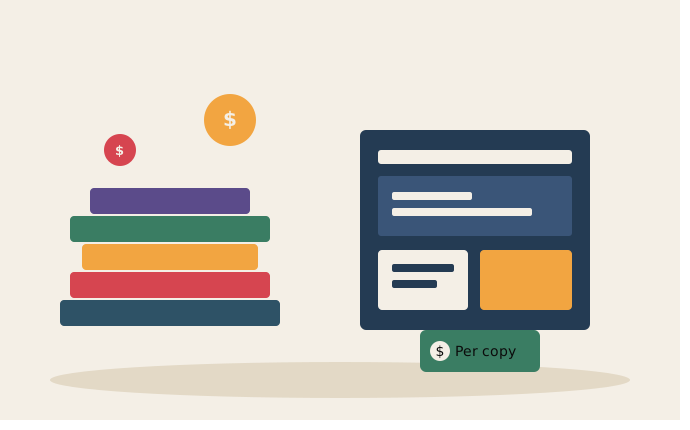
The average cost to print a book ranges from $2 to $10 per copy depending on page count, trim size, paper quality, printing method, and order quantity. A 200-page paperback book usually costs less through print-on-demand services like KDP or IngramSpark compared with traditional bulk printing.
So what is the real question here? It is not really “what does printing cost,” it is more like “which method actually works for what I am doing.” Maybe you just need a small stack of author copies for a launch night. Or maybe you want something that can sit on a shelf and get printed one order at a time whenever someone buys it online. Either way, this guide covers the factors that push your price up or down, gives you a rough calculator you can run yourself, stacks the major platforms up against each other, and answers the questions authors keep asking before they hit print.
What Affects Your Final Printing Cost
There is no single number for book printing cost. Never has been. It moves around based on a handful of factors that all interact with each other, and once you get a feel for each one, it gets a lot easier to stop overpaying.
Page count is probably the single biggest factor. A slim 120 page novella is always going to print cheaper than a 400 page fantasy doorstopper, and that is just physics, more pages means more paper and more ink no matter which printer you go with.
Trim size catches a lot of first time authors off guard. Standard sizes such as 5×8 or 6×9 inches run cheaper because they fit standard press equipment without much fuss. Go with something unusual or oversized, like you often see with art books or children’s picture books, and the price climbs because the printer has to set up custom equipment just for you.
Paper quality and interior color make a real dent in the price too. Plain black and white text on standard white or cream paper is about as cheap as printing gets, which is why it works so well for novels and nonfiction. Full color interiors are a different story, cookbooks, kids books, and photo heavy titles all need them, and that pushes the per page cost up noticeably.
Binding is another piece of the puzzle. Paperback stays the cheapest and most common route for pretty much any genre. Hardcover, especially with a dust jacket, costs more per copy, but it does make a book feel like something you would find on a bookstore shelf rather than something printed at home.
Then there is the printing method itself, which really decides how your costs behave as quantity changes. Print on demand prints a single copy the moment someone orders it, so you never sit on inventory, but you pay more per book because of that convenience. Offset printing wants a much bigger commitment, usually five hundred copies minimum, but once you clear that bar the per unit price drops sharply, which is exactly why it works well for authors planning big runs for events, school orders, or wide retail placement.
And quantity ties the whole thing together. Order one copy through KDP and you might pay four to six dollars for a standard paperback. Order a thousand through an offset printer and that same book could end up costing under two dollars each.
Book Printing Cost Calculator
Because pricing depends on so many moving parts at once, the easiest way to get a real estimate is to walk through each variable yourself. Start with book size, is it 5×8, 6×9, or something else, then add page count, binding type, whether the interior runs black and white or full color, how many copies you need, and which platform you are leaning toward.
Here is a rough sense of what that looks like in dollars for two common setups.
| Book Type | Quantity | Estimated Cost Per Copy |
| Paperback, 200 pages, black and white, 6×9 | 1 copy (print on demand) | $3.50 to $4.50 |
| Paperback, 200 pages, black and white, 6×9 | 100 copies (offset) | $2.00 to $3.00 |
| Hardcover, 250 pages, black and white, 6×9 | 1 copy (print on demand) | $9.00 to $11.00 |
| Hardcover, 250 pages, black and white, 6×9 | 100 copies (offset) | $5.50 to $7.50 |
Treat these as ballpark figures rather than exact quotes. Your actual number will shift depending on the platform, the paper stock, and whatever printing rates happen to be in effect that month, but this at least gives you something real to plan around before you go request an actual quote.
Book Printing Cost Comparison: KDP vs IngramSpark vs BookBaby
Picking where to print matters almost as much as understanding what it costs, because these three platforms are not really built for the same author.
| Service | Best For | Cost Factor |
| Amazon Kindle Direct Publishing (KDP) | Authors just starting out who want a simple, free setup | Print on demand pricing, no upfront cost, lower per copy price only reached through Amazon’s own sales |
| IngramSpark | Authors who want wide retail and library distribution | Slightly higher setup cost but professional grade printing and access to thousands of retailers and libraries |
| BookBaby | Authors who want a managed, full service publishing experience | Package based pricing that bundles printing with formatting, cover design, and distribution support |
KDP is still the easiest door in for a new author, no setup fees, and books print themselves as orders roll in. IngramSpark makes more sense if you actually care about getting into physical bookstores and libraries beyond just Amazon, though you will pay a small setup fee per title for that reach. BookBaby is the pick for someone who wants a lot of hand holding and does not mind paying a bundled fee for it, in exchange you get less do it yourself work on your plate.
Common Mistakes First Time Authors Makes
A lot of new authors get fixated on the price per copy and completely forget to factor in shipping on a bulk order, which can quietly double what a print run actually costs them. Others jump straight to a full color interior for a book that honestly would have looked fine in black and white, and end up paying a lot extra for very little payoff.
One mistake that comes up constantly is ordering way too many copies before there is any real proof the book will sell, which just leaves money sitting in boxes of unsold inventory for months. On the flip side, some authors stick with print on demand forever and never bother checking whether an offset run would actually save them serious money for planned bulk sales at events or wholesale accounts.
And then there is skipping the proof copy, which happens more than you would think. A physical proof is what catches formatting mistakes, color shifts, and trim problems before they show up in a few hundred finished books instead of just one.
Our Recommended Printing Approach for New Authors
If you are just starting out, print on demand through something like KDP is genuinely the safest way to test whether your book sells at all, without putting real money on the line. Once you start seeing consistent sales and have a decent sense of demand, whether that is for events, school visits, or bulk retail deals, that is when it starts making sense to look at an offset run through a platform like IngramSpark to bring your per copy cost down.
Whatever you do, order a physical proof before committing to a big print run, and get quotes from at least two platforms before you decide. Pricing on trim size, paper stock, and shipping swings more than most authors expect going in.
Related Resources
Authors preparing a manuscript for print often need more than just a printing plan. Our Book Formatting Services prepare your interior file for both print and digital editions, while our Book Cover Design Services make sure your cover meets the exact specifications your chosen printer requires. If you are still deciding on a publishing path, our Self Publishing Services walk through every step from manuscript to finished book, and our Amazon KDP Publishing Guide covers the platform in more depth for authors choosing print on demand. For a broader look at the entire process, see How to Publish a Book.