Book Writing
 Book Cover Design
 Book Editing
 Book Formatting
 Book Publishing
 Book Video Trailer
 Book Printing
 Audio Books
 Book Illustrations
 Author Website
 Amazon Page Optimization
 Book Marketing
 Fiction Writing
 Non-Fiction
 Autobiography
 Memoir
 Novel Writing
 Children's Book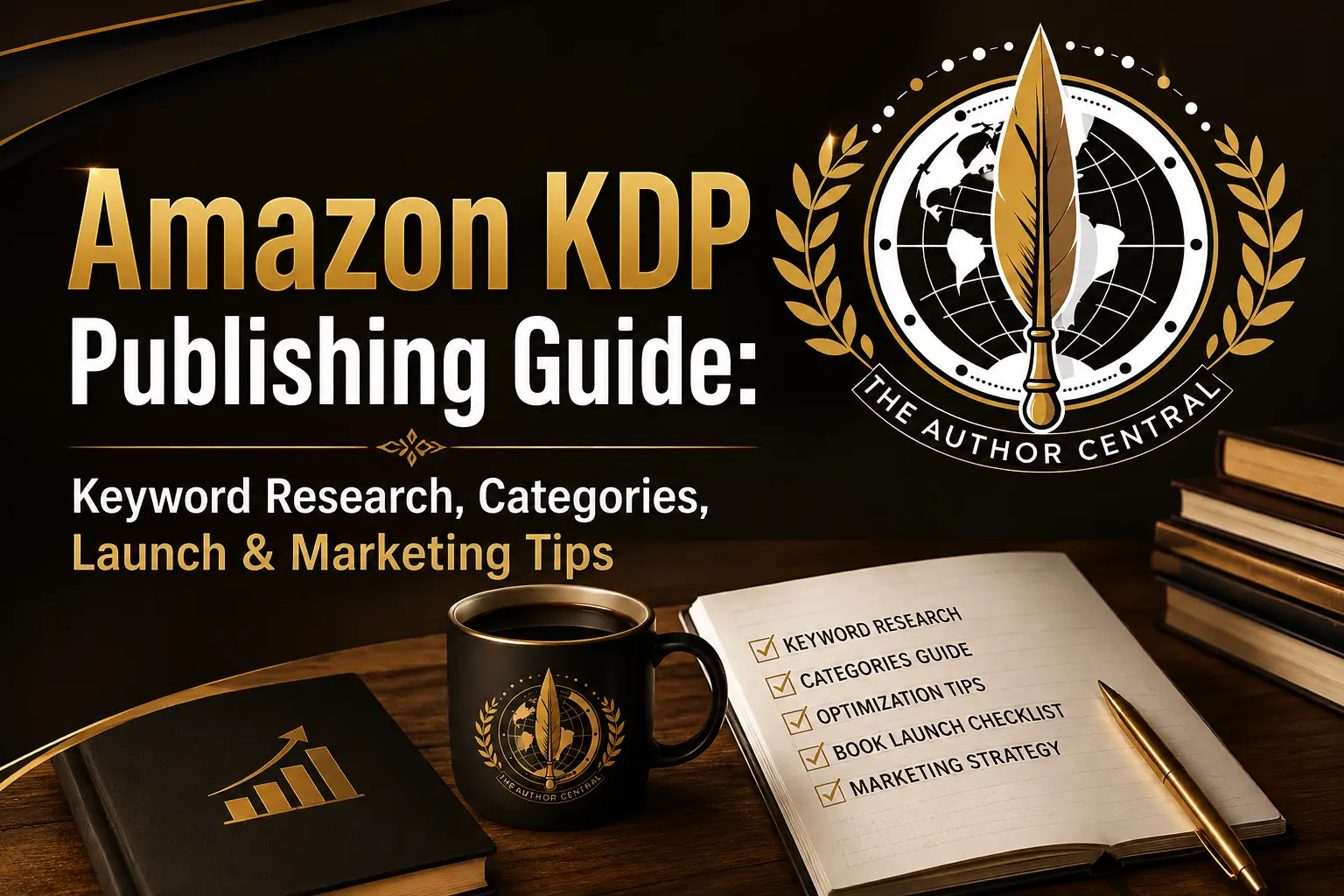
You just typed “The End” on your manuscript. Now you’re staring at the KDP dashboard, and honestly, you have no idea what happens next. This Amazon KDP publishing guide is going to cover the stuff nobody warns you about, from keywords to categories to that weirdly terrifying moment when you finally click “Publish.” I remember my first time doing this. Hit publish, shut my laptop, and thought the hard part was done. Nope. Not even close.
Here’s the pattern I see over and over: writers pour everything into the manuscript and basically nothing into what comes after. Which, fair enough, writing feels like the “real” work. But Amazon is a search engine wearing a bookstore costume. If you don’t get how it ranks titles, your book quietly sinks to page ten before a single stranger sees the cover.
Why This Amazon KDP Publishing Guide Matters More Than You Think
Most people treat KDP like a glorified upload form. Write the book, slap on a cover, hit publish, walk away and hope. But Amazon’s system actually rewards listings that nail their metadata, categories, and keywords right from day one. Skip that part and you’re basically gift-wrapping sales for competitors who bothered to do the boring homework.
The First 30 Days Set the Tone
Amazon watches your book’s early performance almost obsessively. Sales speed, review activity, click-through rates, all of it feeds into how the algorithm treats you for months. Launch with no plan and you torch that window for nothing. Getting the setup right before launch day isn’t some optional extra you get to later. It’s the actual difference between steady visibility and a book that disappears into the void.
What Happens If You Skip This Step
I’ve talked to authors who published, got a handful of sales from friends and relatives, then watched their numbers flatline within two weeks. That’s not bad luck, not really. It’s usually a metadata problem, a lazy category pick, or keywords nobody ever searches. All fixable. Just way harder to fix after the fact than before you launch.
Amazon KDP Keyword Research Guide: Finding Words Readers Actually Type
Keywords are how total strangers find your book instead of scrolling right past it. KDP gives you seven keyword slots, and each one needs to actually work for its spot. Skip vague junk like “fiction book” or “self-help.” Nobody types that into the search bar, and even if a handful did, you’d be fighting thousands of listings for scraps.
Where to Find Real Search Terms
Start dumb simple. Type your book’s topic into Amazon’s search bar and watch what autocomplete throws back at you. Those suggestions come straight from real searches, so they’re basically gold. Tools like Publisher Rocket or KDSpy speed things up a lot, showing search volume next to competition so you’re not just guessing blind.
Don’t skip your competitors either. Look at what phrases keep showing up in their titles, subtitles, even reader reviews. Readers describe books using language authors never think to use, and that leftover language often becomes your best keyword.
Long-tail phrases usually beat short punchy ones anyway. “Time management for busy moms” will typically outperform just “productivity,” because it matches what one specific, motivated person is actually typing at 11pm on their phone. Broad appeal sounds nice on paper. Specificity is what actually wins on Amazon.
Testing and Refining Your Keywords
Keywords aren’t a set-and-forget thing, no matter how tempting that sounds. Check your ranking every few weeks with Amazon’s search bar or a rank tracker. Keyword not pulling impressions after a month? Cut it, try something else. This constant tweaking is honestly what separates authors who take keyword research seriously from the ones who pick seven words once and never touch them again.
Amazon KDP Categories Guide: Choosing Shelves That Actually Sell
Categories decide where your book physically “lives” on Amazon’s shelves, and yeah, they directly affect your shot at that little orange bestseller tag. This part of the amazon kdp categories guide is where a lot of authors either win big or quietly lose visibility without realizing it. Go too broad and you’ll never crack the rankings. Go too narrow and nobody’s browsing there anyway.
Public vs. Backend Categories
KDP only lets you pick two categories during upload. What a lot of people don’t realize? You can request up to ten total by just contacting Amazon support after your book’s live. Actually use this. Backend categories usually carry way less competition than the two visible ones, so your book has a real shot at a category bestseller badge instead of drowning among thousands of similar titles.
Do Your Homework Before Choosing
Browse Amazon’s category tree yourself instead of trusting some blog post from three years ago. Categories get renamed, merged, split into weird subcategories more often than you’d think. What worked great for a similar book last year might not even exist under that name anymore. A bit of digging here saves you from picking something that technically fits but pulls basically zero traffic.
Amazon KDP Book Launch Checklist for a Strong Debut
Rushed launches almost never go well. I’ve watched this happen more times than I can count, someone finishes their manuscript, gets excited, publishes the next morning with zero plan. Let’s avoid that. Here’s a checklist worth actually working through first.
Pre-Launch Essentials
Nail your cover before anything else. Readers judge a book in under three seconds, so a weak or amateur-looking cover kills momentum before a single word gets read. Then polish your description. Short paragraphs, bullet points, actual reader benefits instead of a dry plot summary nobody asked for. Set up your Author Central profile too, while you’re at it. Builds credibility, links your titles together for easy cross-promotion later.
Line up a small batch of advance reader copies before your official launch. This is one of the most overlooked steps on any amazon kdp book launch checklist, but ARC reviews give you social proof right out of the gate, and that matters a ton during that first-month window we talked about earlier.
Launch Day Actions
Announce the release across your email list and social platforms the same day, not staggered across two weeks. Concentrated attention sends a way stronger signal to Amazon than scattered mentions trickling in slowly over time. Got a little budget room? Consider a short Amazon Ads campaign timed right to launch day. Even a modest spend can nudge your book into more search results while organic momentum builds underneath it.
Amazon KDP Optimization Tips That Keep Working After Launch
Publishing isn’t a finish line, whatever it feels like in the moment. It’s more like planting something that needs ongoing attention, especially since new titles flood your niche every single day, all fighting for the same eyeballs yours is fighting for. That’s exactly why amazon kdp optimization tips matter just as much after launch as they do before it.
Refresh Your Metadata Periodically
Go back and revisit your title, subtitle, and description every few months. Trends shift constantly, and phrases pulling clicks a year ago might feel flat now. Small subtitle tweaks alone can meaningfully bump click-through rates, and you don’t even have to touch the actual book to see that benefit.
Watch Your Pricing Strategy
Price isn’t a set-once decision either, much as we’d all like it to be. Testing different price points, especially during promo windows, helps you find that sweet spot between volume and royalty per copy. A $2.99 ebook might move more units total. A $4.99 price could actually net more revenue overall, depending on your genre and how your specific audience shops.
Keep an Eye on Your Reviews
Reviews aren’t just social proof, they’re a ranking signal too, whether we like that or not. Respond where it makes sense. Notice a recurring complaint about formatting or pacing? Take it seriously. Small fixes based on real feedback can improve both your rating and your long-term ranking over time.
Amazon KDP Marketing Strategy Beyond the Amazon Ecosystem
Relying only on Amazon’s internal traffic caps your growth pretty fast, honestly. A solid amazon kdp marketing strategy pulls readers in from outside too, and that gives you a safety net Amazon can never take away from you.
Build an Email List Early
Your email list is the one audience you actually own, full stop. Amazon can change its algorithm overnight with zero warning, but your subscriber list stays entirely yours no matter what happens on the platform. Offer a free short story or bonus chapter for sign-ups, then keep that list warm with updates whenever you’ve got something new coming.
Use Social Proof and Content Marketing
Encourage happy readers to leave honest reviews. Both count and quality shape buyer trust and Amazon’s internal ranking signals. Beyond that, try blogging about your book’s themes, guest posting somewhere relevant, or teaming up with other authors for newsletter swaps. Small efforts, sure, but they stack up over months, sending steady traffic that doesn’t depend on Amazon’s mood that particular week.
Wrapping Up This Amazon KDP Publishing Guide
Publishing on KDP takes more than uploading a file and crossing your fingers. This Amazon KDP publishing guide covered the real essentials: keywords readers actually type, categories that give you a genuine shot at visibility, a launch that builds momentum instead of fizzling out fast, and marketing that keeps going long after the initial excitement wears off.
None of this needs a huge budget or some special technical skill. It just needs attention, a bit of patience, and a willingness to treat your launch like the actual business decision it is. Do even half of what’s here, and you’re already ahead of most authors who jump straight from writing to publishing without ever looking back.