Book Writing
 Book Cover Design
 Book Editing
 Book Formatting
 Book Publishing
 Book Video Trailer
 Book Printing
 Audio Books
 Book Illustrations
 Author Website
 Amazon Page Optimization
 Book Marketing
 Fiction Writing
 Non-Fiction
 Autobiography
 Memoir
 Novel Writing
 Children's Book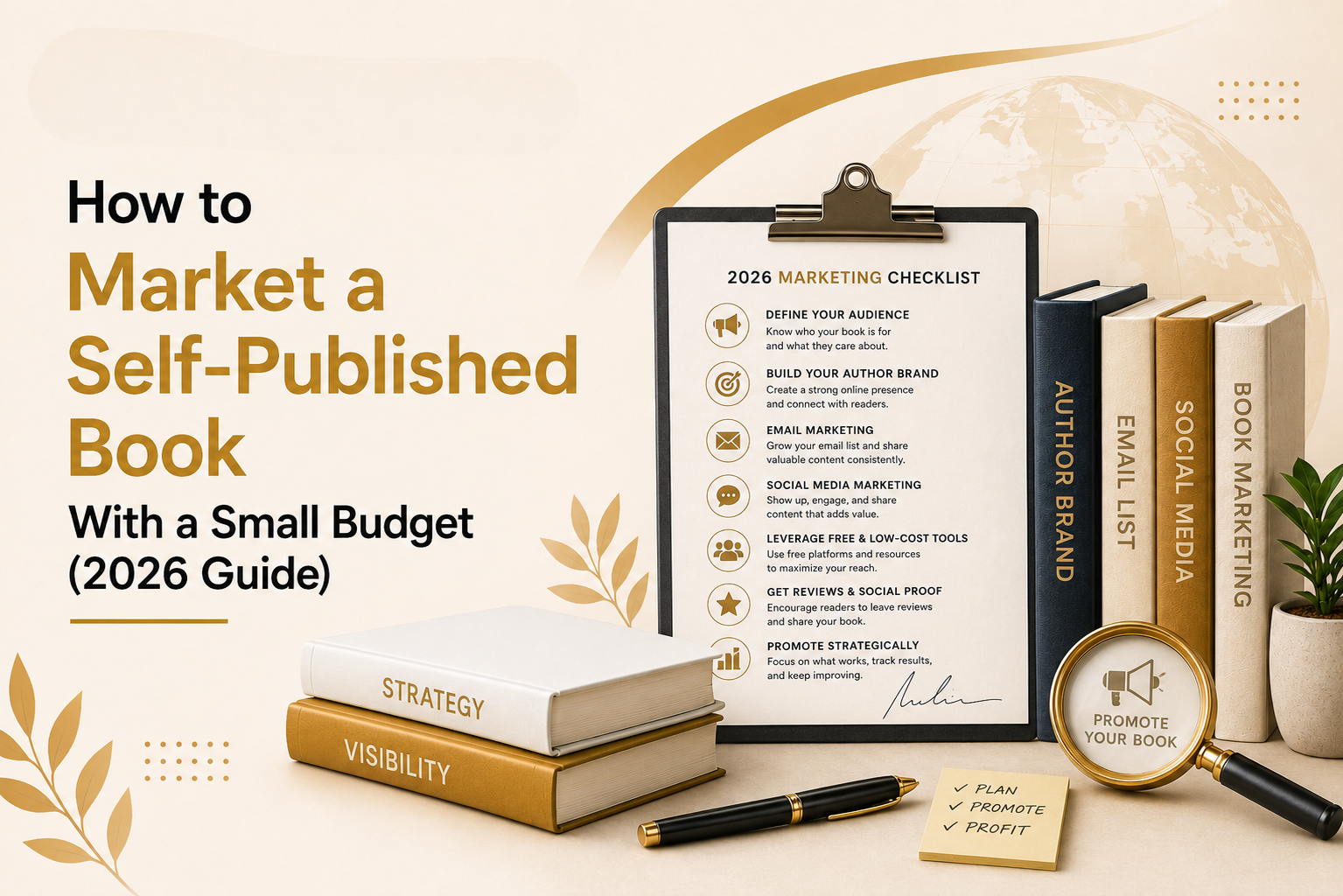
So you finished your book. That alone puts you ahead of most people who say they’re “working on something.” You edited it more times than you’d like to admit, picked a cover you finally stopped second guessing, and hit publish.
Now the real problem shows up. Almost nobody knows your book exists.
I’ve watched a lot of indie authors hit this wall, and honestly it catches most people off guard. You’d think the hard part is done once the book is live, but publishing it is closer to the halfway mark than the finish line. Traditionally published authors don’t talk about this much either, mostly because a lot of publishers barely market their mid list titles anymore. Unless you’re one of maybe a dozen lead titles a season, you’re getting the same silence an indie author gets, just with a bigger logo on the spine.
Here’s the part that actually matters though. You don’t need a marketing department or a huge budget to build an audience. You need a handful of things done consistently, and the patience to let them add up over months instead of days. That’s genuinely the whole game. Nobody wants to hear that, because it’s less exciting than “one weird trick,” but it’s the truth.
What follows is what actually works, pulled from what indie authors keep repeating in forums, newsletters, and Reddit threads for years now. Not theory. Just the stuff that moves books.
Money Isn’t Your Biggest Problem. Attention Is.
Traditional publishers have budgets, sure. But they also have hundreds of other titles competing for attention inside the same company, and most books only get a few weeks of real push before the next season’s list takes over. As an indie author, you don’t have that competition happening in your own house. You’re not fighting your own publisher for shelf space. You can afford to be slower, more personal, and more consistent than a publisher will ever be with any single title. I actually think this is a real edge, not a consolation prize people say to make self-publishing sound better than it is.
So let’s get into what to actually do.
-
Fix the Basics Before You Spend a Dime on Marketing
A lot of authors jump straight to Instagram or ads before checking whether their book listing is even doing its job. That’s backwards, and it’s the mistake I see most often.
Start with your title and subtitle. Would someone searching Amazon or Google actually type those words? If not, it’s worth revisiting, especially for nonfiction, where the title is basically doing SEO work whether you meant it to or not.
Check your categories and keywords on whatever platform you published through. Most authors set these once at launch and never touch them again, even though better category placement can be the difference between page one and page ten. This takes twenty minutes and most people never bother.
Read your book description like a stranger would, not like the person who wrote the book. Does it sound like a summary from a school report, or does it sound like something that makes a person want to know what happens next? If it’s the first one, rewrite it. I’d rather see three punchy sentences than a paragraph that plays it safe.
And the cover. I know it feels like a design decision more than a marketing one, but your cover is doing most of the work before anyone ever reads your description. If you’re only going to spend money on one thing, spend it here. This is the one piece of advice I’d fight someone on.
None of this costs much. It just takes an honest, slightly uncomfortable look at your own listing, and most people avoid it because it means admitting something isn’t working yet.
-
Get a Simple Website Up
You don’t need anything fancy. A single page with your cover, a short bio, links to buy the book, and a way to join your email list covers most of what you actually need. Carrd, WordPress.com, or even a basic Squarespace trial page will do the job fine. Nobody’s judging your site design at this stage.
This matters because social platforms can change their algorithm overnight and tank your reach for no reason at all, and that’s happened to enough authors that it’s not paranoia anymore, it’s just how these platforms behave. Your website is the one piece of online space that’s genuinely yours, and nobody can quietly deprioritize it in a feed.
-
Build an Email List, Even If It Feels Slow at First
Ask ten working indie authors what actually sells books, and at least eight of them will say email. Not TikTok. Not Instagram. Email. I used to be skeptical of this too, it feels a little old fashioned, but the logic holds up.
Here’s why it works so well. Everyone on your list already chose to hear from you. You’re not fighting an algorithm to reach them, and you’re not competing with a thousand other posts in someone’s feed at eleven at night.
A simple way to start is offering something small in exchange for a signup. A short story, a deleted scene, the first three chapters, whatever fits your genre. Then send something real every month or so, not just “buy my book” emails, but actual updates and behind the scenes thoughts. People stay subscribed to newsletters that feel like an actual person wrote them, and they unsubscribe fast from ones that read like a press release.
MailerLite and Mailchimp both have free tiers that’ll cover you until your list is big enough to need more. Don’t overthink the tool. The list matters more than the platform.
-
Use What Amazon Already Gives You for Free
If your book’s on Amazon, you’re sitting on tools most authors never fully use, which honestly surprises me every time I talk to a new author.
KDP Select is worth a look if it fits your strategy. It opens up free promotional days and access to Kindle Unlimited readers, which for some genres, especially romance and thrillers, makes up a huge chunk of the reading audience. I’ve seen authors in those genres do genuinely well almost entirely through KU.
Reviews matter more than people think, not just for social proof but for how Amazon’s algorithm treats your book. Ask readers who finished your book and actually liked it to leave one. Most won’t unless you ask, and that’s not because people don’t want to help, it’s just not the first thing on their mind after finishing a book.
It also helps to look at the “customers also bought” section for books similar to yours. It tells you a lot about how to position your own book’s description and keywords, and it’s free market research most authors never think to use.
-
Show Up Where Your Readers Already Hang Out
You don’t need to be everywhere. You need to find the two or three places your specific readers already spend time, and actually participate there.
Goodreads is still underrated, in my opinion. Set up a real author profile, join a few groups in your genre, and talk to people like a person instead of a billboard.
Reddit can work surprisingly well too, communities like r/selfpublish or genre specific subreddits, but only if you show up to add something useful before you ever mention your book. People notice fast when someone’s only there to sell something, and Reddit in particular does not forgive that.
Facebook groups built around specific genres are still active in plenty of niches, particularly romance, fantasy, and cozy mystery. Just read the rules before you post anything, because moderators in these groups take that seriously.
-
Pick One or Two Social Platforms, Not All of Them
Trying to post on five platforms usually means doing all of them badly. I’d rather see an author nail one platform than half-heartedly show up on four. Pick where your actual readers are and go deeper there instead.
BookTok is real, and it’s driven a genuinely surprising number of indie fiction sales with zero ad spend behind them. If you write fiction, especially YA, romance, or fantasy, it’s worth learning how it works, even if the idea of making videos makes you cringe a little at first. Most authors feel that way in the beginning.
Pinterest gets overlooked constantly, but for nonfiction and self help authors it’s a quiet workhorse. Pins keep showing up in searches for months or even years after you post them, unlike a tweet that’s dead within an hour.
If you write business books, memoir, or anything more professional in tone, X or LinkedIn might actually fit your audience better than anything visual would.
Whatever you pick, showing up three times a week for six months beats posting daily for two weeks and burning out. I’d take the boring, consistent version every time.
-
Ask for Reviews Directly (and Never Fake Them)
This one is simple but a lot of authors skip it out of pure awkwardness, and I get it, asking feels a little vulnerable. Reach out to beta readers, friends who actually read the book, and early readers, and ask them directly to leave an honest review once it’s out. A short, polite message works better than most people expect.
Do not buy reviews. It’s against platform policy, and getting caught can get your book pulled entirely. It’s not worth the risk for a short term bump, and frankly it’s not a shortcut worth taking even if nobody ever caught you.
-
Team Up With Other Authors in Your Genre
This is one of the most underused free strategies out there, and it’s also one of my favorites because it costs nothing but a little outreach. Find a few other authors writing in a similar space and look for ways to help each other out.
Newsletter swaps, where you each promote one another’s book to your list, cost nothing and reach an audience that already likes your kind of book. Joint giveaways work the same way. Group promos during genre sales events can put your book in front of hundreds of new readers who found you through someone else’s audience instead of an ad.
-
Pitch Podcasts, Blogs, and Local Papers
This one gets skipped constantly, but local newspapers, niche blogs, and small podcasts are often actively looking for content and far more open to featuring an indie author than people assume. A short, specific pitch about your writing journey, an angle tied to something timely, or the story behind the book can land you exposure you’d otherwise have to pay for. It costs you an email and a little nerve.
- Pay Attention to What’s Actually Working
At some point, stop guessing and start checking. Google Analytics on your website, click data from your email newsletters, and actual sales numbers will tell you far more than likes or follower counts ever will. Follower counts feel good, but they don’t pay anyone’s bills.
If something’s converting, do more of it. If something’s eating your time without moving the needle, it’s okay to let it go, even if you’ve already put weeks into it. Sunk cost is a real trap here, and I’ve watched authors keep grinding on a platform out of stubbornness long after the numbers told them to stop.
Final Thoughts
None of this is complicated, but it does take showing up more than once. Marketing a self-published book on a small budget really comes down to a few things repeated consistently. A listing that actually sells the book. An email list you take care of. A genuine presence in the places your readers already are. It’s slower than a big ad budget, but it works, and a lot of authors who are selling steadily today started exactly where you are right now, with no audience, no budget, and a book they weren’t sure anyone would find.