Book Writing
 Book Cover Design
 Book Editing
 Book Formatting
 Book Publishing
 Book Video Trailer
 Book Printing
 Audio Books
 Book Illustrations
 Author Website
 Amazon Page Optimization
 Book Marketing
 Fiction Writing
 Non-Fiction
 Autobiography
 Memoir
 Novel Writing
 Children's Book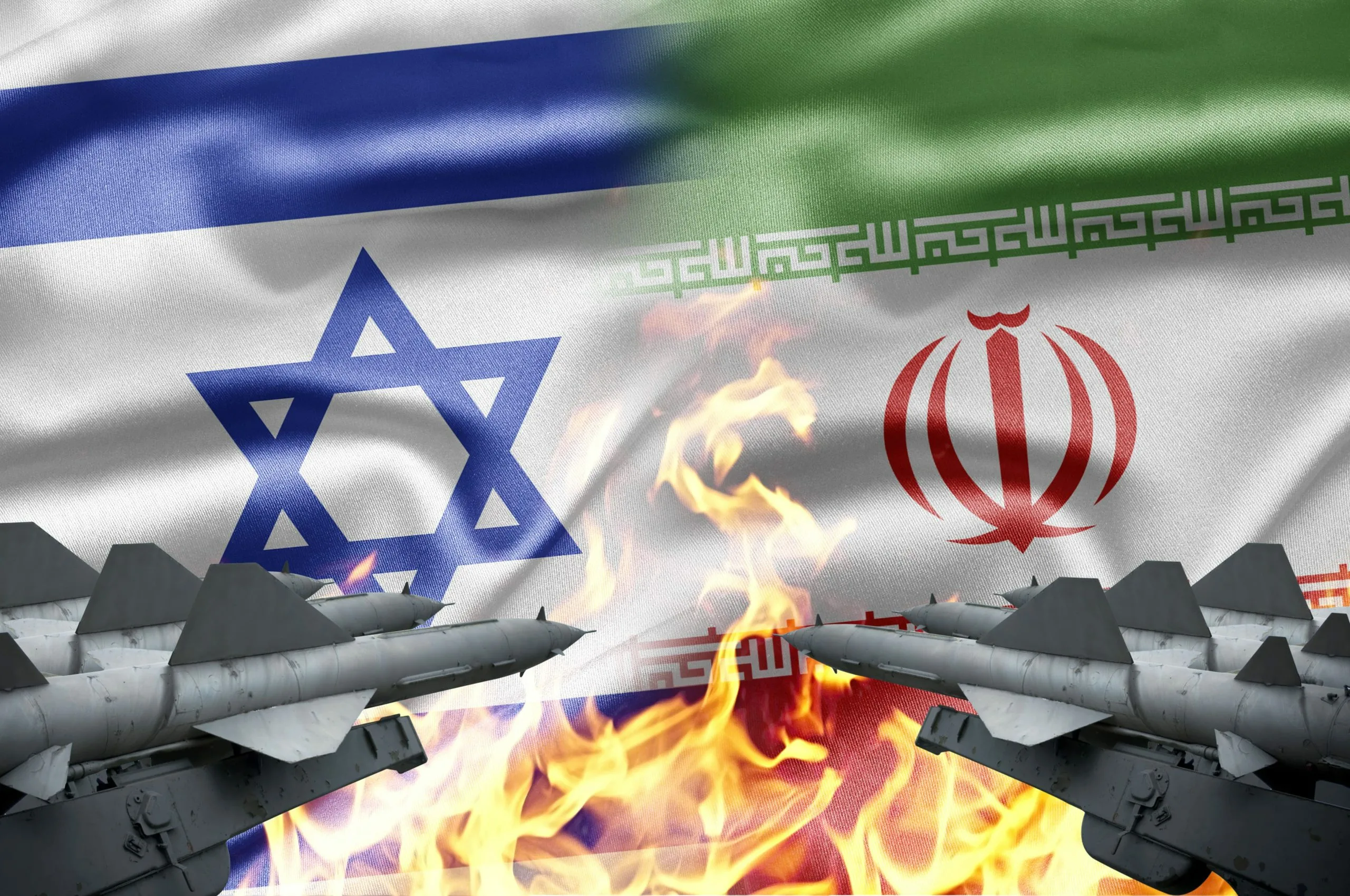
Something shifted recently and most people felt it even if they could not name it exactly.
It was not just another news cycle. It was that particular feeling of watching history move in real time, the kind where you find yourself reading the same headline three times because your brain keeps refusing to fully absorb what it is saying. The Iran-Israel-US war did not just escalate a regional conflict. It rearranged the assumptions that governments, markets, academics, and ordinary people had been operating on for years. Alliances that seemed stable started looking fragile. Energy prices moved in ways that rippled into grocery stores and heating bills on the other side of the world. Conversations that had been theoretical in foreign policy circles became suddenly, uncomfortably real.
And somewhere in the middle of all of that, a certain kind of person had a very specific thought.
Not just “this is serious.” But “someone needs to write the real book about this. The one that actually explains what is happening and why.”
Maybe that person was you.
If it was, you are not alone and you are not wrong. The authors who recognized this moment for what it is and started moving are already ahead. The ones still thinking about it are watching that window get smaller every week.
History Has Always Rewarded the Authors Who Showed Up at the Right Moment
There is a pattern that repeats itself so consistently across modern history that it barely qualifies as insight anymore. It is just what happens.
Every war, every major geopolitical rupture, every moment when the world reorganizes itself around a new reality produces a generation of books that become the permanent record of how that moment was understood. Not the news reports, which everyone forgets within a year. Not the government documents, which almost nobody reads. The books. The ones written by people who were close enough to understand something real and skilled enough to put it on paper in a way that readers could hold onto.
World War II gave the world Anne Frank’s diary, William Shirer’s meticulous account of the Third Reich, and Churchill’s own memoir of the years he spent trying to stop what eventually happened anyway. Those books did not just sell. They became the lens through which entire generations understood one of the most important events in human history.
The chaos and moral injury of Vietnam produced Tim O’Brien’s The Things They Carried, Neil Sheehan’s A Bright Shining Lie, and Michael Herr’s Dispatches. Books that told the truth about that war in ways that official accounts never did and that are still being read, still being taught, still being argued over today.
After September 11th, Lawrence Wright spent years reporting and writing The Looming Tower, a book that explained the roots of Al-Qaeda to a public that had been completely blindsided. It won the Pulitzer Prize. It became a television series. It shaped how an entire country processed what had happened to it.
The Israel-Palestine conflict has generated a continuous stream of defining books across decades. From the early historical accounts to Rashid Khalidi’s The Hundred Years War on Palestine, one of the most debated political books of recent memory, these are the texts that serious people reach for when they want to understand not just the events but the forces behind them.
The Iran-Israel-US war is not a footnote. It is a chapter. A long one, with consequences that are still unfolding and implications that nobody has fully mapped yet. The books being written right now about this conflict will be read thirty years from now by people trying to understand how this moment happened and what it meant. The authors writing those books are making decisions today.
Smart Authors Recognized This Moment Early. Here Is What Separates Them From Everyone Else.
The authors who end up writing the defining books about major historical events are not always the most credentialed people in the room. They are not always the most famous or the most connected. What separates them is something simpler and more actionable than any of that.
They recognized that their specific knowledge, their particular vantage point, their personal experience or professional expertise, had just become urgently relevant to millions of readers who were searching for exactly what they had to offer. And then they acted on that recognition before the window closed.
Right now, people are searching for Iran Israel war books, Middle East conflict analysis, US foreign policy explained, and Iran nuclear program books in numbers that reflect exactly how disorienting and serious this conflict feels to ordinary readers. They are not finding enough. The serious, substantive, deeply informed books that this moment deserves are not on shelves yet because the people who could write them are still deciding whether to start.
That gap is an opportunity. A real one, with a time limit attached to it.
Who Has the Book That Readers Are Actually Looking For
The answer to this question is broader than most people assume.
Political analysts, former intelligence officers, and foreign policy professionals carry the kind of structured understanding of this conflict that general readers cannot find in news coverage. A carefully argued, well-researched non-fiction book from someone who genuinely understands the layers of what is happening between Iran, Israel, and the United States is not just valuable right now. It is a gap in the market that someone is going to fill. The question is whether it gets filled by someone who actually knows what they are talking about, and that person might be you.
Academics and researchers, Middle East historians, nuclear proliferation scholars, international relations experts, regional economists, have spent careers building exactly the kind of depth that readers are suddenly desperate to access. The general public does not read academic journals. But it does buy books. A book that makes your expertise legible to an intelligent general reader does not diminish your academic work. It extends its reach by an enormous distance.
Business professionals and executives in energy, supply chain, defense, and finance are watching this conflict reshape their industries in real time. The book that explains what the Iran-Israel-US war means for global oil markets, for supply chain strategy, for geopolitical risk management, written by someone who is actually living through those changes from inside an affected industry, is a book that no journalist and no academic can write. Only you can write it, because only you have that specific vantage point.
And then there are the personal stories. The members of the Iranian and Israeli diaspora who carry the weight of this conflict in ways that are not political but human, in memories of places and families and identities that this war has just made newly complicated and newly urgent. Reading Lolita in Tehran came from one woman’s lived experience inside Iran. Persepolis came from one person’s memory of growing up during the Iranian Revolution. Those books sold millions of copies and became part of how the world understands a place and a people it would otherwise have no way to access. Your story, told honestly, belongs in that same tradition.
The Authors Who Are Moving Now Will Shape What Readers Think for a Generation
Here is the part that the publishing industry understands and most aspiring authors do not fully appreciate until it is too late.
Timing in publishing is not just an advantage. It is the difference between being the book that defines how readers first understand a subject and being the book that arrives after someone else has already shaped that understanding.
The readers looking for serious books about the Iran-Israel-US conflict right now are forming opinions, building mental frameworks, and establishing reference points that will last for years. The journalists covering this conflict are looking for expert authors to interview and quote. The university professors building new courses around this geopolitical moment are assembling reading lists. All of that is happening right now, and it will happen with or without your book.
The authors who start today are the ones who will be available when public attention is at its highest. The authors who wait will arrive into a conversation that somebody else has already defined.
A professionally produced book takes time. Writing, editing, cover design, formatting, publishing, and distribution done properly is a process of months, not weeks. Which means the decision you make this week is the decision that determines whether you are part of this moment or watching it from the outside.
Writing the Book Does Not Mean Writing It Alone
The most common thing heard from people who have real expertise and genuinely important perspectives on this conflict is a version of the same sentence. I would not even know where to begin.
That is a completely understandable thing to feel. A full-length book is a specific craft, different in almost every way from a research paper, a policy brief, a report, or an article. Most people, including some of the sharpest and most informed thinkers working in any field right now, have simply never had occasion to develop it. The absence of that craft does not mean the absence of a book worth reading. It means the absence of one specific skill that can be supplied by someone else.
Professional ghostwriting is how this works. A skilled ghostwriter does not take your ideas and replace them with their own. They draw yours out. They interview you with the specific goal of finding where your knowledge is clearest, where your experience is most vivid, and where your argument is most original. They then build a manuscript around your voice, your expertise, and your perspective with the structure and readability that serious books require. Everything that makes the book worth reading comes from you. The craft of making it readable at book length is what the ghostwriter adds.
This process is behind a significant portion of the most influential non-fiction books published in any given decade. It is professional, it is legitimate, and when it is done by the right people it consistently produces better books than most experts would produce working entirely alone.
What the Path From Your Idea to a Published Book Actually Looks Like
The process is more navigable than most people imagine once someone is guiding you through it properly.
Your knowledge and perspective become a manuscript through a structured ghostwriting collaboration, with every draft returning to you until what is on the page is unmistakably yours in voice and content. A professional editor then works through the manuscript to sharpen its structure, strengthen its argument, and ensure it carries the authority that serious readers expect from a book worth their time. Cover design and interior formatting follow, because the way a book presents itself before a reader opens the first page determines whether they take it seriously at all. Full publishing with distribution across major retail channels, online platforms, and library systems worldwide makes your book available everywhere. And targeted marketing, built specifically around the readers most likely to find your book essential, covers everything from Amazon optimization to media outreach to positioning you as a credible and quotable voice on your subject.
With the right professional team behind it, this entire process can move from first conversation to published book in roughly ninety days. A book started today can be in readers hands while this conflict is still the defining story of the moment.
The Conversation Is Already Happening. The Only Question Is Whether Your Voice Is In It.
The Iran-Israel-US war has created one of the most significant and genuinely urgent publishing moments in years. The readers searching for serious books about this conflict are not going to stop searching. The journalists looking for expert authors are not going to stop looking. The professors building reading lists are not going to wait.
All of that is going to happen. The books that fill those shelves are going to be written. The voices that define how this moment is understood are going to emerge.
You have something to say about this that the world does not have access to yet. Not because it is not worth saying, but simply because you have not written it down.
The Author Central is here to help you change that.
We offer complete ghostwriting services for non-fiction books on politics, conflict, geopolitics, and current affairs. We provide professional editing, cover design and formatting, full publishing support with worldwide distribution, and targeted marketing built to connect your book with the readers who are already searching for it. Our team has helped first-time authors, working professionals, academics, and independent thinkers turn serious ideas into seriously read books.
Reach out for a free consultation today. Tell us what you know and what you believe needs to be said. We will help you build the book around it before this moment moves on without you.