Book Writing
 Book Cover Design
 Book Editing
 Book Formatting
 Book Publishing
 Book Video Trailer
 Book Printing
 Audio Books
 Book Illustrations
 Author Website
 Amazon Page Optimization
 Book Marketing
 Fiction Writing
 Non-Fiction
 Autobiography
 Memoir
 Novel Writing
 Children's Book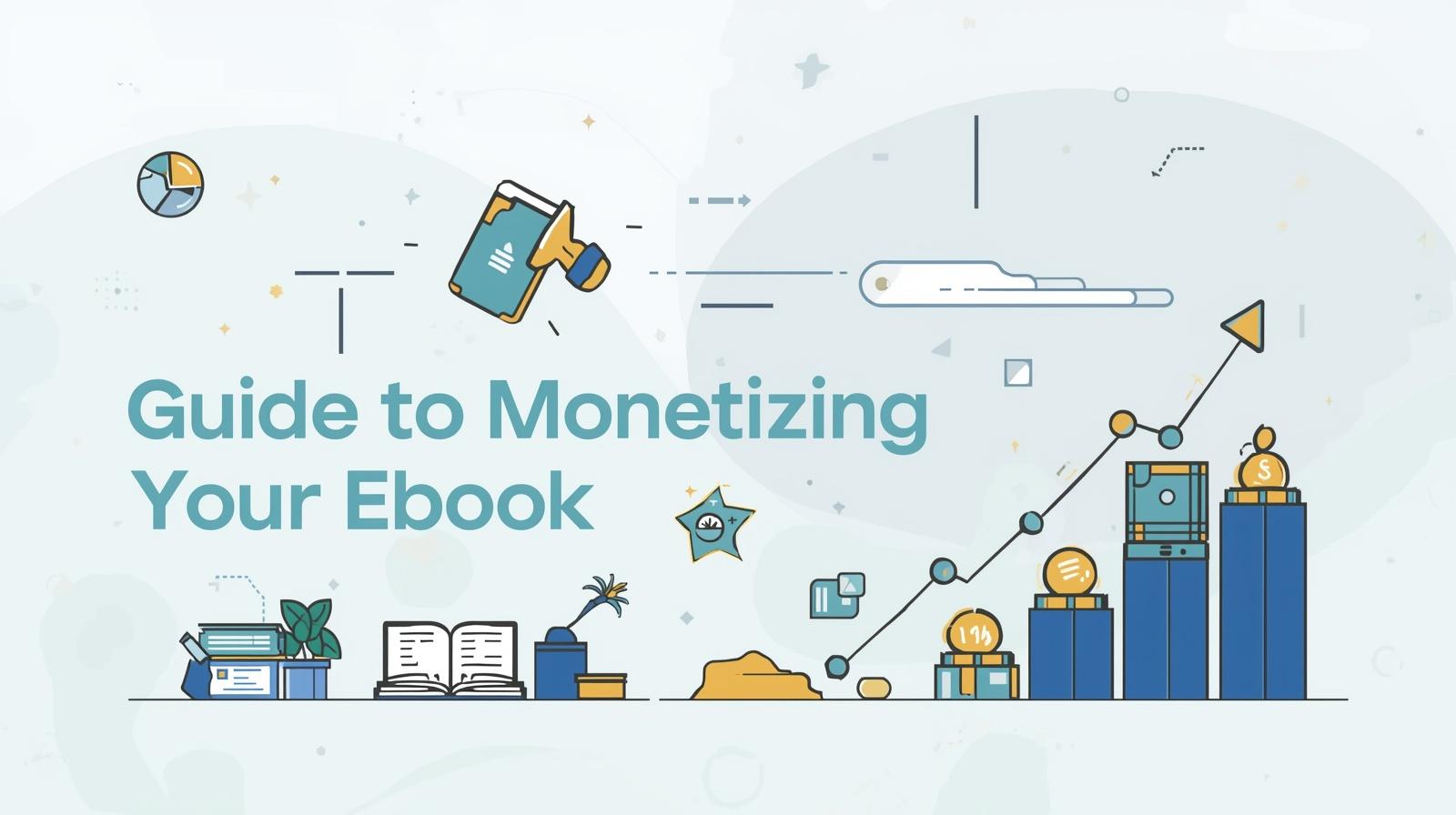
You poured your heart into writing that eBook. You spent late nights editing, formatting, and designing a cover that pops. But now it is just sitting on your hard drive, or worse, gathering virtual dust on a retailer’s shelf with only a handful of downloads.
Many new authors believe that simply publishing an eBook is enough. They hit “upload” on Amazon KDP or Gumroad and wait for the money to roll in. Then, when nothing happens, they assume eBooks are dead. Nothing could be further from the truth.
The reality is that monetizing your eBooks is a skill. It is a mix of strategy, marketing psychology, and smart systems. When done correctly, a single eBook can fund your entire lifestyle for years. In this guide, I am going to show you exactly how to turn your digital file into a real income stream. We are not just talking about sales. We are talking about building a system that works while you sleep.
Step 1: Understand That Your eBook Is a Solution, Not Just Words
Before you can sell anything, you need to shift your mindset. Your eBook is not a collection of chapters. It is a solution to a specific problem. People do not buy books. They buy better results.
If you wrote a cookbook, you are not selling recipes. You are selling time savings and delicious family dinners. If you wrote a fitness guide, you are selling confidence and health. If you wrote a business book, you are selling more money or less stress.
To monetize effectively, you must be able to answer this question in ten seconds: What does the reader gain after finishing this book? If you cannot answer that clearly, your pricing and marketing will always feel difficult. Go back and define the transformation your eBook provides. That transformation is what you will actually sell.
Step 2: Choose the Right Monetization Model for Your Audience
Not every eBook should be sold the same way. There are three powerful ways to monetize your writing, and the best authors use a mix of all three.
The first model is direct sales. This is what most people think of. You set a price, you sell a copy, you earn a profit. This works well for standalone guides, novels, or niche tutorials. You can sell directly through your own website using platforms like Gumroad, Payhip, or Lemon Squeezy. You keep more of the profit here compared to large retailers.
The second model is the high value low price strategy. This is where you price your eBook between two and five dollars. The goal is volume. You want thousands of people to buy without thinking twice. This model works best when you have a large audience or when you run paid ads. You make up in quantity what you lose in price point.
The third model is the loss leader. This is my favorite for long term success. You give the eBook away for free or at a very deep discount. Why would you do that? Because inside the book, you promote your higher priced products. These could be courses, coaching, templates, or membership sites. The eBook becomes the entry point. It builds trust and collects email addresses. The real money comes from the upgrades.
Step 3: Price Your eBook for Maximum Profit Without Fear
Pricing anxiety is real. Many authors price their work too low because they feel insecure. Do not fall into that trap. A three dollar eBook can be a great deal, but a twelve dollar eBook signals higher value.
Here is a simple rule for pricing nonfiction or how to guides. If your book solves a problem that costs people time or money, price it between nine and fifteen dollars. If your book is for entertainment like a novel, price it between three and six dollars for the best conversion rates. For ultra niche professional guides, you can charge twenty to forty dollars without pushback.
Test different price points. Start slightly higher than you think. You can always run a discount later. Raising prices is harder than lowering them. Also remember that perceived value matters. A book priced at zero dollars is often ignored because people assume it has no worth. A book priced at ten dollars gets read.
Step 4: Build a Sales Funnel That Works While You Sleep
This is where most authors fail. They post a link on social media and hope for the best. To truly monetize your eBooks, you need a funnel. A funnel is simply a path that turns a stranger into a paying customer.
The top of your funnel is free value. You write blog posts like this one. You record YouTube videos or start a podcast. You give away a free chapter of your eBook. You share tips on social media. You build authority without asking for money yet.
The middle of your funnel is the offer. You direct interested people to a landing page that describes your eBook and its benefits. This page should have no distractions. No sidebar links. No navigation menu. Just a headline, benefits, testimonials, and a buy button.
The bottom of your funnel is the upsell. After someone buys your eBook, thank them and offer something else. This could be a worksheet, a video course, or a one on one consultation. This upsell is often where you make the highest profit margins.
Step 5: Use Email Marketing to Turn One Sale Into Ten
Your email list is the most valuable asset you own. Social media platforms change their algorithms constantly. But your email list is yours forever. Every time someone buys your eBook, they should also be invited to join your newsletter.
Once they are on your list, you can send them helpful content. You can share tips related to your eBook topic. You can ask for reviews. You can announce new books or discounts. A warm email list will buy from you again and again.
Here is a powerful tactic. Send a sequence of five emails to every new buyer. The first email delivers the download link. The second email gives a pro tip not included in the book. The third email asks for an honest review. The fourth email offers a related product at a discount. The fifth email simply says thank you and asks for a reply. This builds a relationship, and relationships lead to repeat sales.
Step 6: Expand Beyond Amazon to Maximize Reach
Amazon KDP is a great starting point, but it should not be your only channel. Amazon takes a large cut of your royalties. They also control your pricing and can change your listing anytime. Smart authors diversify.
Sell directly from your own website using a simple platform. This gives you one hundred percent control. You can run promotions whenever you want. You can bundle your eBook with other products. You keep almost all the profit.
You can also distribute to other retailers like Apple Books, Barnes and Noble, and Kobo using a distributor like Draft2Digital. These platforms have loyal customers who do not shop on Amazon. Every new channel adds potential readers.
Do not forget about libraries. Platforms like OverDrive and Bibliotheca allow libraries to purchase your eBook. This is a different revenue stream that can provide steady, predictable income over time.
Step 7: Repurpose Your eBook Content for Endless Traffic
One eBook can become many products. This is the secret of top earning authors. Do not let your content sit in one format.
Turn your eBook into a series of blog posts. Search engines love long form content. Each chapter can become a detailed post. Link those posts back to your sales page. This drives free organic traffic for years.
Turn your eBook into a video series. Read the chapters aloud or create slide presentations. Upload these videos to YouTube. Add a link to your eBook in the description. YouTube is the second largest search engine in the world. Use it.
Turn your eBook into podcast episodes. Many people prefer listening to reading. You can upload the audio to platforms like Spotify and Apple Podcasts. Mention your eBook in every episode. This reaches a completely different audience.
Turn your eBook into social media threads. Twitter threads and LinkedIn carousels love step by step advice. Break your book into ten or twenty posts. Each post drives curiosity and leads to your bio link.
Step 8: Get Reviews and Social Proof Immediately
Nobody wants to be the first to buy. We all look for social proof. If your eBook has zero reviews, sales will be slow. If your eBook has twenty positive reviews, sales will flow much easier.
Start by giving away free copies to trusted readers before you launch. Ask them for honest reviews in exchange for the free copy. Do this with ten to twenty people. Now you launch with reviews already in place.
Ask every buyer to leave a review. Make it easy for them. Send a direct link. Offer a small bonus like a checklist for leaving an honest review. Most people are happy to help if you simply ask and make it simple.
Respond to every review you receive. Thank people for positive feedback. Politely address any negative feedback by showing you care. Future buyers see these responses and trust you more.
Step 9: Run Low Cost Ads That Actually Pay Off
Once your eBook is selling organically, you can scale with paid ads. But do not run ads until you have proven that people will buy. Otherwise you are just burning money.
Start with small budgets. Ten dollars per day on Facebook or Amazon ads is enough to test. Target a very specific audience. Instead of targeting “readers”, target “people who like specific competitor authors” or “people interested in your specific niche topic”.
Track your results carefully. If you spend ten dollars to make fifteen dollars in sales, you have a winning ad. Scale that up slowly. If you spend ten dollars to make three dollars, pause the ad and try a different audience or image.
Retargeting ads are often the most profitable. These are ads shown to people who visited your sales page but did not buy. They already showed interest. A small discount or a reminder can close the sale.
Step 10: Bundle and Upsell for Higher Average Order Value
Getting one customer to spend more is easier than finding ten new customers. Bundling is your best friend here.
Bundle your eBook with related digital products. A recipe eBook could bundle with a meal planner spreadsheet. A fitness eBook could bundle with a workout log PDF. A business eBook could bundle with a template pack. The perceived value of the bundle is much higher than the items alone.
Create different tiers. A basic tier is just the eBook. A standard tier adds worksheets or audio. A premium tier adds video lessons or a private community chat. This strategy works incredibly well because people like choices. Some will always choose the higher tier.
Conclusion: Your First Sale Is Closer Than You Think
Monetizing your eBooks is not about luck or being a famous author. It is about following a system. You write a book that solves a real problem. You price it fairly. You build a funnel that turns strangers into buyers. You use email to build relationships. You repurpose your content to drive free traffic. You ask for reviews. You test ads. You bundle and upsell.
You do not need to do everything at once. Pick one step from this guide and implement it today. If you have not written your eBook yet, start writing one chapter. If you have written your eBook but made no sales, set up a simple landing page on Gumroad. If you have made some sales but want more, start building your email list.
The difference between struggling authors and successful authors is not talent. It is taking action. You have the knowledge now. Go apply it. Your first consistent month of eBook income is waiting for you.