Book Writing
 Book Cover Design
 Book Editing
 Book Formatting
 Book Publishing
 Book Video Trailer
 Book Printing
 Audio Books
 Book Illustrations
 Author Website
 Amazon Page Optimization
 Book Marketing
 Fiction Writing
 Non-Fiction
 Autobiography
 Memoir
 Novel Writing
 Children's Book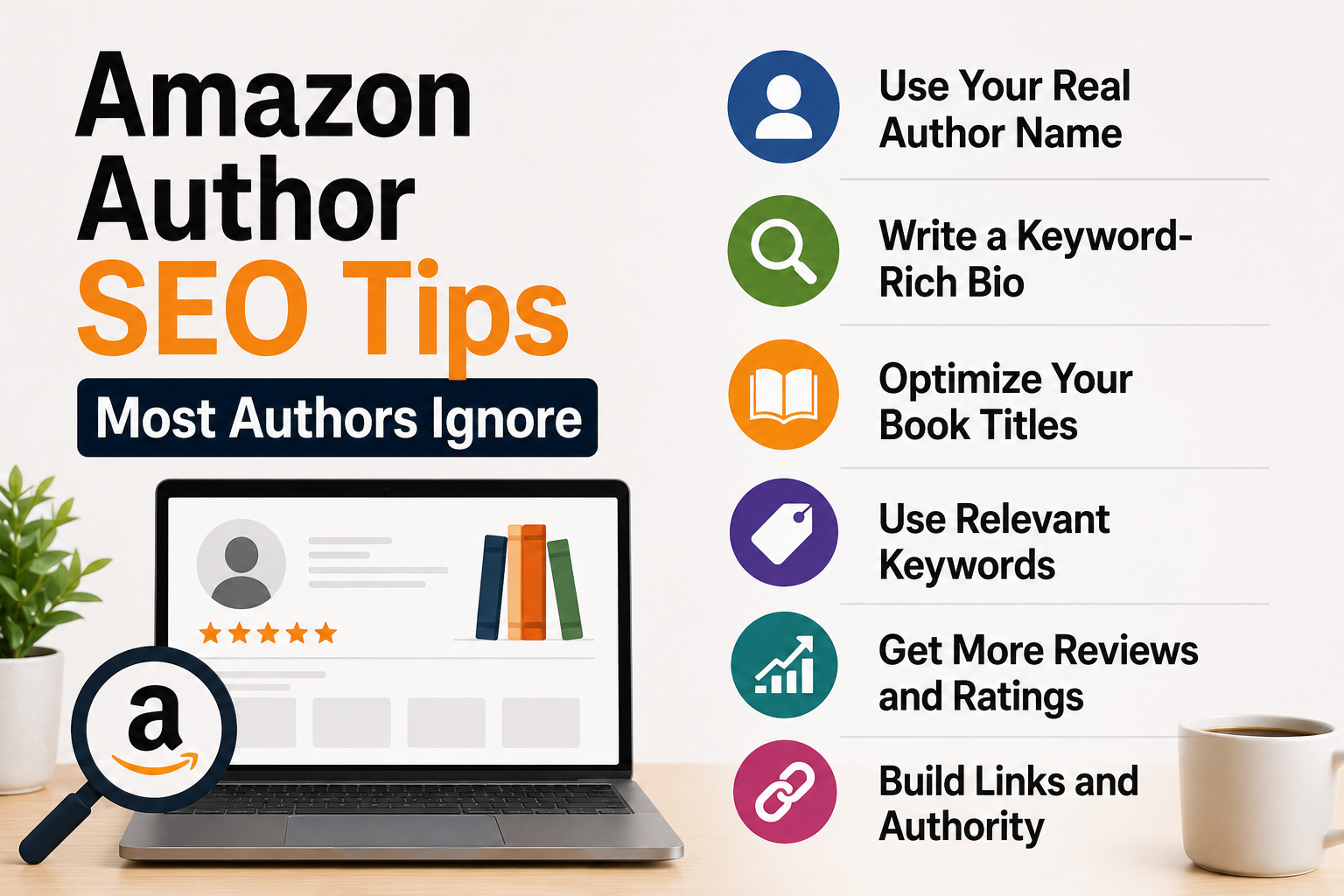
Nobody warned me about any of this when I started publishing. I put my first book on Amazon, told a few people about it, and then sat there refreshing my sales dashboard like that would somehow make readers appear. Weeks went by. Then months. The book was good, I genuinely believed that, but it was going nowhere. A writer friend eventually pulled me aside and asked if I had done anything with my keywords or my categories. I had no idea what she was talking about. She introduced me to best amazon seo optimization services for books and explained that Amazon was not a bookstore in the traditional sense at all. It was a search engine. And I had published a book on a search engine without doing a single thing to help anyone find it. That conversation was humbling but it was exactly what I needed to hear.
The Mindset Shift That Changes Everything
When most people think about putting a book on Amazon they imagine something like placing it on a shelf in a store. You get a good cover, write a decent description, set a reasonable price, and hope someone walking by picks it up. That mental model is not completely useless but it misses the most important thing about how Amazon actually works.
Amazon is making decisions constantly about which books to show which readers. Every time someone types something into that search bar, the algorithm is sorting through millions of titles in milliseconds deciding what to put in front of that person. Those decisions are based on signals. Relevance signals, sales signals, conversion signals, engagement signals. And the thing that took me too long to understand is that authors have meaningful influence over many of those signals.
Once that clicked for me everything changed. I stopped thinking about my books as objects sitting on a digital shelf and started thinking about them as pages that needed to be optimized the same way any other page on the internet does. That shift in thinking is what separates authors who figure out Amazon from the ones who spend years frustrated and confused about why their work is not getting found.
The Keywords You Picked Are Probably Not Working
I went back and looked at the keywords I had entered for my first book about eighteen months after publishing it and I sat there shaking my head at myself. I had typed in things like fiction novel and adventure story and drama. Terms so vague and so generic that they described approximately four hundred thousand books on the platform. I had not done a single minute of research. I had just typed words that seemed related and moved on.
Amazon gives you seven keyword fields in KDP and most authors treat them as an afterthought. What they actually are is some of the most valuable real estate you have. Each field accepts a full phrase, not just a single word, which means you can enter something like small town mystery with amateur sleuth and female protagonist as one keyword entry. That entire phrase is searchable. Real readers type phrases like that.
The way I find keywords now is embarrassingly simple. I open Amazon and I start typing into the search bar the way I imagine a reader would if they were looking for my kind of book. The autocomplete dropdown that appears is Amazon showing me in real time what actual people are actually searching for. Those phrases are gold. I write them down and the ones that describe my book accurately become my keywords.
Go into your KDP dashboard today and look at the keywords you entered for each of your titles. Read them the way a stranger would. Ask yourself honestly whether those are the words a real reader would type when they are looking for their next book. For most authors the answer is going to be uncomfortable and that is okay. Fix them and move on.
Categories Are Hiding a Visibility Opportunity Most Authors Miss
When I published my first book I picked two categories that seemed fine and gave it no more thought than that. It was only later when I started seriously researching amazon author page optimization services for books that I understood categories were doing something far more important than just organizing my book on the platform.
Categories are their own discovery channel. Readers browse bestseller lists inside categories looking for their next read. When your book ranks well in a category it gets seen by readers who are already in the mindset to buy. And the categories you choose directly affect whether that ranking is even possible.
Amazon lets you be in two categories at upload but you can email KDP support after publishing and request to be added to additional categories. Some authors end up in eight or ten categories this way and the visibility difference is real. The key is choosing categories that are specific enough that your book can actually rank but busy enough that readers are genuinely browsing them.
I spent an afternoon once just clicking through bestseller lists in my genre and noting which categories kept coming up for the books that were performing well. Then I looked at how many reviews the top ranked books in those categories had. A category where the number one book has two hundred reviews is very different from one where number one has twenty thousand. One of those is a door you can open. The other one is a wall.
What Your Book Description Is Actually Doing
Most authors write their book description as a summary. Here is the setup, here is the conflict, here is a hint about the resolution, buy the book to find out what happens. That approach is not completely wrong but it is leaving a lot on the table.
Your book description is one of the places where Amazon gathers signals about what your book is about and who should see it. The specific language you use, the phrases and terms that appear in that text, feeds into how the algorithm understands and categorizes your work. This is something the best amazon seo optimization services for books always address and it is something most independent authors have genuinely never considered.
The good news is that writing a description that works for SEO and writing a description that compels readers to buy are not opposing goals. They are actually the same goal approached from slightly different angles. A romance description that naturally includes phrases like forced proximity and enemies to lovers and slow burn is both telling readers exactly what kind of story they are getting and matching the search language those readers use. The description is doing two jobs at once without feeling forced or mechanical.
Go back and reread your current descriptions. Ask yourself whether they use the language of your genre, the phrases that fans of that genre reach for when they talk about the books they love. If they do not, that is your rewrite.
Titles and Subtitles Are Searchable and Most Authors Waste Them
This is something I wish someone had told me before I named my first three books. Your title and your subtitle are indexed by Amazon. They show up in search results. The words you put there carry weight in the algorithm in a way that the words buried in your description do not.
For nonfiction this is straightforward. A subtitle that includes a specific searchable phrase is actively helping readers find your book. Something like the difference between a book called simply Morning Routines versus Morning Routines: How High Performers Structure the First Hour of Their Day to Get More Done is not just a matter of being informative. The second version is doing real search work.
For fiction it is more subtle because cramming keyword phrases into a subtitle can make a book look cheap or try hard in a way that pushes readers away. But the words you choose for your title still matter. Titles that echo the natural language of your genre will perform better in search than titles chosen purely for literary reasons, all else being equal. This is worth thinking about before you name your next book rather than after.
Review Velocity Is the Thing Nobody Explains Properly
For a long time I thought the goal with reviews was simply to accumulate as many as possible. More reviews equals more credibility equals more sales. That is partially true but it misses something important about how Amazon actually weighs reviews in its ranking decisions.
What Amazon cares about more than total review count is how recently reviews are coming in. A book with sixty reviews where fifteen of them arrived in the past month will typically rank better in search than a book with three hundred reviews where the most recent one is from eight months ago. Amazon reads recent review activity as a signal that the book is still being actively read and talked about, and it rewards that signal with better placement.
This changes how you should think about your review strategy. It is not enough to get a burst of reviews at launch and then move on. You want a steady trickle of reader engagement over time. Asking for reviews in your back matter consistently, staying connected to reader communities in your genre, running occasional promotions to bring fresh readers to older titles, all of these contribute to keeping that activity alive.
A Plus Content Exists and Most Authors Have Never Heard of It
Somewhere around two years into publishing I discovered that Amazon offers eligible authors something called A Plus Content, which lets you add enhanced visual sections to your book listing page. Formatted image and text combinations, comparison sections, additional story context presented in a visually engaging way. It makes a listing look dramatically more professional than a plain page with just a description.
The SEO angle here is that A Plus Content gives Amazon more material to work with when figuring out what your book is about and who to show it to. More relevant content on the page means more signals and more signals generally means better placement. Beyond the algorithm benefits, a listing with A Plus Content simply converts better because it looks like something a professional put together rather than something uploaded in an afternoon.
Check your KDP dashboard to see if your books are eligible. If they are, prioritize adding A Plus Content to your best performing titles first and then work through the rest of your catalog over time.
Pricing Yourself Out of Discovery
This one genuinely surprised me when I first came across it. Your price relative to comparable books in your category is a factor in how Amazon treats your book in search. A book priced significantly higher than everything else in its category faces a discoverability penalty that no amount of keyword optimization can fully overcome.
This does not mean you should race to the bottom on pricing. It means you should know what the pricing landscape looks like in your specific categories and make sure you are not so far outside that range that readers are clicking away before they even finish reading your description. Look at the top ten books in your main categories and note where they are priced. Position yourself somewhere in that conversation rather than outside it entirely.
Working Through All of This Without Burning Out
Reading through everything here it can start to feel like an overwhelming amount of work and honestly if you try to tackle it all at once it is. The approach that has actually served me well over the years is to treat Amazon SEO as an ongoing practice rather than a problem to solve once and move on from.
Start with keywords because the changes are quick to make and the potential impact is immediate. Then look at your categories. Then revisit your descriptions. Then work through the smaller elements when you have time and energy for them.
If you want professional help with this there are genuinely best amazon seo optimization services for books out there. People who do this work specifically for authors and understand the nuances of the platform in ways that take years to develop on your own. If your catalog is large enough or your books have enough commercial potential the investment is worth seriously considering.
But even without outside help, just understanding the principles and applying them consistently will put you ahead of most authors who are still uploading books and hoping Amazon figures out the rest. The opportunity is real. Most of your competition is not doing any of this. That gap is yours to close.