Book Writing
 Book Cover Design
 Book Editing
 Book Formatting
 Book Publishing
 Book Video Trailer
 Book Printing
 Audio Books
 Book Illustrations
 Author Website
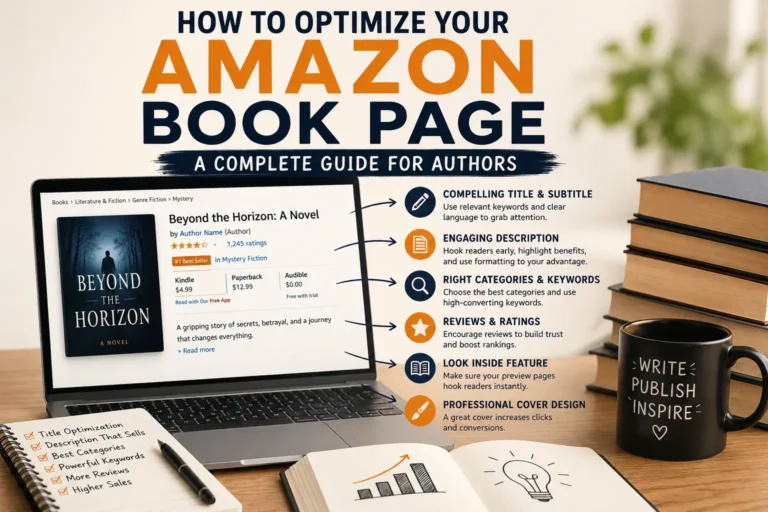
 Amazon Page Optimization
 Book Marketing
 Fiction Writing
 Non-Fiction
 Autobiography
 Memoir
 Novel Writing
 Children's Book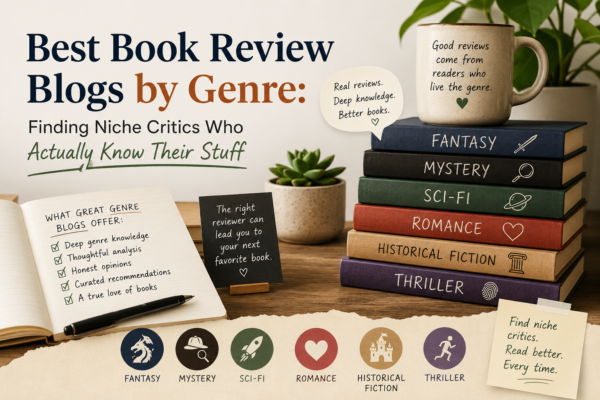
It’s 2 AM. You finished the book an hour ago but you’re still lying there staring at the ceiling, replaying the ending. Or you’re at work the next morning and your coworker asks why you look distracted and you go, “oh, nothing” but it’s definitely not nothing. That’s what a truly good book does to you. And somewhere out there, a book reviewer is trying to find the words to bottle that feeling and hand it to strangers on the internet.
I ended up buying a novel at a coffee shop once because of a review I stumbled across while waiting for my order. The reviewer didn’t rave about it in that exhausting way critics sometimes do they just said it was the kind of book that made them miss their subway stop twice. I was sold. Three days later I’d read the whole thing and was already tracking down the author’s backlist. That’s the specific magic a good book review can pull off.
So who are these people, exactly? The critics, the bloggers, the BookTok creators the voices that keep nudging your to-read list higher and higher. Let’s get into it.
What Actually Makes a Book Reviewer Worth Following?
Anyone can post “5 stars, couldn’t put it down!!!” The reviewers who genuinely shape what people read are doing something different. It’s harder to pin down than it sounds.
🤝
Trust, Mostly. And It Takes Forever to Build.
The reviewers who stick around are the ones where you’ve followed their recommendations enough times to realize okay, when they love something, I’m probably going to love it too. It’s the same reason you’ll drive across town to eat somewhere a specific friend recommends, but shrug at a Yelp rating. History matters. You can’t manufacture it.
📚
They Actually Know Their Stuff (Without Showing Off About It)
Most serious book critics have some background in journalism, English lit, or publishing and it shows in how they write. They can place a new novel in context, catch patterns across genres, and point out when a debut author is doing something genuinely inventive versus just recycling what worked in 2015. What separates the good ones is they do all this without making you feel like you’re being graded on your reading choices.
📈
Their Words Actually Move Books
This isn’t just a vibe thing it’s logistical. When the New York Times gives an unknown novel a rave review on a Sunday, bookstores are calling distributors by Monday morning. When BookTok collectively decides a book is the one, publishers are scrambling to reprint within the week. These reviewers determine what shows up on front tables, what libraries order, what publishers put their weight behind.
The Book Review Landscape: How to Navigate It
There are so many places to find book reviews now that it can feel like too many. Here’s a quick breakdown of the main types and what you’re actually getting from each:
| Platform Type | What You’re Getting | Why It Matters |
|---|---|---|
| 📰 Traditional Newspapers | Professional literary analysis | Industry respect, career-making reviews |
| 👥 Community Sites | Real reader opinions & ratings | Honest feedback from people like you |
| ✍️ Niche Blogs | Deep genre knowledge | Expert insights for specific interests |
| 📱 Social Media | Visual reviews, personal connection | Authentic reactions, trending discoveries |
The Platforms and Critics That Actually Shape What America Reads
🏛️ The Old School Heavyweights
📰 The New York Times Book Review
This is still the one that can change a book’s entire trajectory over a single weekend. I’ve seen debut novels go from “nobody’s heard of this” to “sorry, we’re sold out” in 48 hours after a Times review. The weight it carries is almost unfair.
Critics worth knowing: Parul Sehgal has this rare ability to make you see a familiar story like you’ve never seen it before. Jennifer Szalai can take a dense political biography and turn her review into something genuinely compelling to read. And Dwight Garner the man reviews books almost daily and somehow doesn’t sacrifice quality. It’s a bit bewildering, honestly.
🗞️ The Washington Post Book World
Ron Charles might be the only critic who can make you genuinely laugh while also delivering serious literary analysis — his video reviews have this weird charm that works better than it has any right to. Carlos Lozada is the one to watch for political books; his reviews often become part of the conversation around the book before the book even hits bestseller lists.
💻 The Digital Game Changers
⭐ Goodreads
Goodreads kind of broke the whole model — suddenly anyone with a library card and an internet connection could build an audience bigger than some newspaper critics. The useful thing isn’t just the ratings; it’s finding the specific reviewers whose taste lines up with yours. Maybe you both love slow-burn psychological thrillers but bail on anything with a love triangle. Once you find those people, it’s almost like having a personal recommendation service.
🔍 Kirkus Reviews
This one’s more industry than reader-facing, but worth knowing about. Publishers, bookstore buyers, and librarians read Kirkus to decide what’s worth investing in and the reviews drop months before a book hits shelves. It’s essentially the trade forecasting what will matter before the rest of us get a chance to weigh in.
The Independents Who Are Quietly Running the Show
📱 Social Media Changed Everything (And Keeps Changing It)
A few years back, the idea that a 23-year-old with a TikTok account could outsell a New York Times review would have seemed absurd. Now it’s just Tuesday. Social media didn’t just add a new layer to book criticism it reshuffled the whole deck.
▶️
Jesse the Reader
Feels like that friend who’s read literally everything and somehow never makes you feel bad about it. His YouTube presence works because the love for books is obviously real he can sell you on literary fiction without ever once being insufferable about it.
📖
Emma the Reader
Her enthusiasm is genuinely contagious you’ll find yourself adding books to your cart just watching her get excited about them, which probably isn’t great for your wallet but is great for your bookshelf.
📸
withcindy
Proved you could make book content that’s genuinely beautiful AND worth reading. The aesthetic pulls you in; the actual analysis is what keeps you there. Both halves pull their weight.
✍️ The Literary Blog World
The Millions
Reading this one feels like getting a peek into how writers actually think about each other’s work. When someone like Roxane Gay or Emily St. John Mandel reviews a book, you’re getting a perspective that comes from inside the craft not just outside observation.
Electric Literature
Consistently shines a light on voices that might get buried in the broader publishing noise. If you care about finding diverse authors and understanding books within their cultural context, this is a good one to bookmark.
Free Book Reviews Online: The Good Stuff That Doesn’t Cost Anything
Paid subscriptions are fine, but you don’t need them to find great reviews. Some of the most genuinely useful content out there is completely free — you just have to know where to look.
🏛️ The Library Angle
Library Journal and Booklist are technically written for librarians people whose entire job is finding the best books for their communities. That professional obligation shows. Their recommendations tend to be genuinely solid, and regular readers can access them without any paywall.
👥 Reddit, Actually
Say what you want about Reddit, but r/books, r/Fantasy, and the genre-specific subreddits produce some of the most honest book discussions you’ll find anywhere. No commercial incentive, no PR copy, just people who read too much and have strong opinions about it. Facebook book groups can be similarly good once you find the right one it’s basically a book club that never has to end on a weird note about the wine.
How to Write a Book Review That People Actually Want to Read
Watching good critics work is a pretty effective tutorial. There are a few things the best ones do consistently that separate their reviews from the forgettable ones:
Hook Them Fast, Then Stay on Task
The best reviews open with something that makes you want to keep reading a surprising angle, a weird personal detail, a really clean first sentence. But they never forget that their actual job is helping someone decide whether this book is worth their time and money. Clever openings that go nowhere are a waste of everyone’s afternoon.
Show the Evidence
Saying “the prose is gorgeous” means nothing without a passage that demonstrates it. Saying “the plot falls apart in the third act” means nothing without explaining specifically where and why. Good critics treat their claims like arguments they back them up. Vague adjectives are the enemy.
The Review Isn’t About You
The readers who leave reviews to show off their own taste or vocabulary are easy to spot and easy to ignore. The ones worth following are asking the same practical questions every time: Who’s going to love this? What should you brace for going in? How does it sit next to other books you might already know?
What’s Getting Reviewed (and Read) Right Now?
Critics tend to pick up on shifts in what readers want before the bestseller lists catch up. Right now there are two currents running through a lot of what’s getting attention:
🌍
Fiction That’s Trying to Reckon With Something
Climate fiction has spread way beyond sci-fi you’re seeing it in literary fiction, thrillers, even romance. Historical fiction is having a real moment too, especially books that use the past to think through what’s happening right now. Readers seem hungry for stories that have something at stake.
🎤
Voices That Haven’t Had the Platform
A lot of the most exciting reviewing right now is actively seeking out authors who’ve been overlooked by the mainstream memoirs especially. The books coming out of these quieter corners tend to feel fresher, and the criticism around them often does too.
Which Review Source Is Actually Right for You?
| Review Source | What You Get | Perfect For |
|---|---|---|
| 📰 Traditional Critics | Expert analysis, industry context | Serious readers who want depth |
| 👥 Community Reviews | Authentic reactions, varied opinions | Finding books that match your taste |
| ✍️ Genre Specialists | Deep knowledge, insider perspectives | Fans who want to go deeper |
| 📱 Social Media | Visual content, trending picks | Discovering what’s popular now |
💡 For Readers
Don’t marry one source. The best reading discoveries tend to happen when you’re following a mix a couple of professional critics, some community reviewers, and a social media voice or two whose taste you’ve learned to trust. The slightly outside-your-usual-lane picks are often where the good stuff hides.
✍️ For Writers
Do the research on which platforms actually reach your readers, not just any readers. A well-placed review in the right genre blog can move more copies than a general-interest writeup. And build real relationships where you can cold pitching a hundred people at once is usually less effective than it feels when you’re doing it.
Where Is Book Criticism Headed?
Video reviews have taken over TikTok and YouTube. A BookTok moment can push a book viral overnight, completely skipping traditional channels. Podcast discussions are offering the kind of long-form conversation that newspapers stopped having space for years ago. The access points just keep multiplying.
⚠️
Traditional Critics Still Have a Role
The democratization is real consistency and passion can build an audience for anyone willing to put in the work. But traditional critics bring historical perspective and analytical context that’s genuinely hard to replicate in a 60-second video. The most well-read people tend to use both, which is probably the right call.
Finding Your People in the Reading World
The best book reviews do something a little improbable they put the right book in front of the right person at exactly the right moment. Whether it’s a 3,000-word essay in a major paper or a two-minute TikTok, the underlying job is the same: help someone find a story that matters to them.
Once you find the critics and reviewers whose taste lines up with yours, your whole reading life gets easier. Instead of standing in a bookstore hoping something grabs you off the shelf, you’ve got a running list of things you actually want to read. In a world where publishers put out thousands of books every week, having a few trusted voices is less of a luxury and more of a survival strategy.
Ready to Find Your Next Favorite Book?
Pick one reviewer in your favorite genre and follow their lead for a month. You might be surprised where it takes you.