Book Writing
 Book Cover Design
 Book Editing
 Book Formatting
 Book Publishing
 Book Video Trailer
 Book Printing
 Audio Books
 Book Illustrations
 Author Website
 Amazon Page Optimization
 Book Marketing
 Fiction Writing
 Non-Fiction
 Autobiography
 Memoir
 Novel Writing
 Children's Book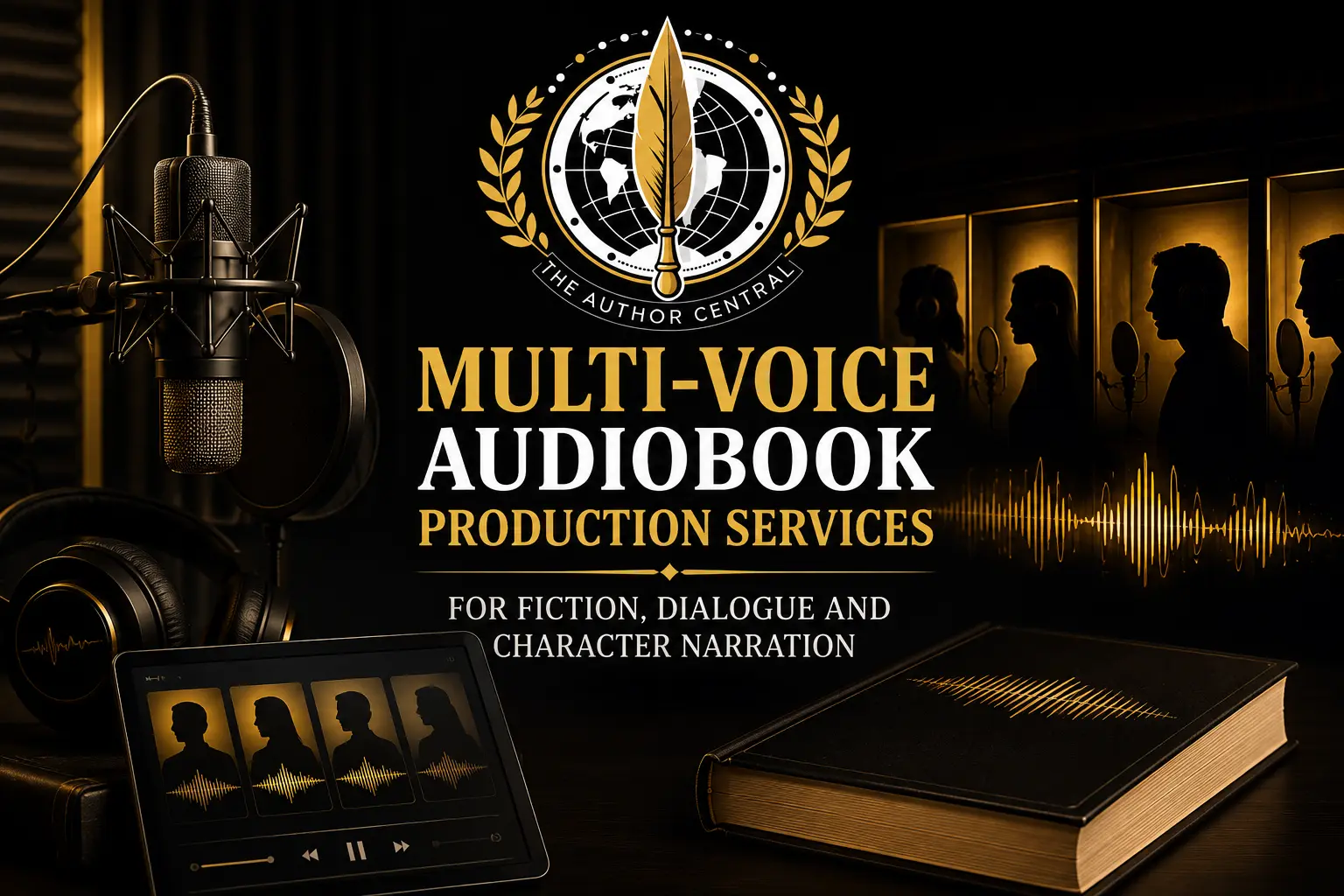
Okay so. There’s this memory I keep circling back to. Long drive, years ago, I put on a fantasy audiobook and it wasn’t one narrator doing everything, it was a full cast. And something about it just landed differently. That was my first real run in with multi voice audiobook production services, and once I got what actually goes into making that work, I couldn’t unhear the difference anymore. Every audiobook after that, I was listening for it.
You ever sit through a book where one narrator’s trying to be ten people in a single scene? Rough. Works fine for a slow, quiet story maybe. But heavy dialogue, a big cast, and suddenly one voice carrying it all just doesn’t hold up. That’s the gap. That’s where multi voice production actually earns its keep.
Why Multi-Voice Audiobook Production Services Matter for Fiction
Characters are the heartbeat here, honestly. People connect with how someone sounds almost as much as what they’re saying. An old sailor, weathered, gruff, shouldn’t sound like a teenager. A villain hissing a threat shouldn’t sound anything like the hero’s big speech three chapters later. Bring in real multi voice audiobook production services and suddenly every character’s got their own skin. Their own rhythm.
I worked on something once, a mystery, six major characters, all wildly different. Detective, blunt, no patience for anything. Suspect, nervous, rambled through every answer she gave. Sidekick, dry humor, needed exact timing or the joke just died. There was even this minor character, an old librarian, maybe ten lines total, but she still needed her own voice because she shows up right at a big turning point. Hand all that to one person reading straight through and so much of what made the book fun just flattens out. Full cast instead, each actor owning their piece, and the whole thing breathes differently. It’s not subtle either. You notice immediately.
Listeners now, a lot of them grew up on podcasts, audio dramas, games with full voice casts. So when they pick up fiction, dialogue heavy stuff especially, they’re kind of expecting that level of care already. I’ve talked to readers who check reviews specifically for whether a book uses multiple narrators before they even buy it. Says something about where things are headed.
How Dialogue Heavy Books Benefit the Most
Books built on constant back and forth, conversation driving everything, these get the most out of multi voice audiobook production services. Courtroom drama. Heist crew arguing over a plan gone sideways. Slow burn romance, endless banter between two leads. Scenes like that basically demand distinct voices because the tension, the humor, it all comes from how people react to each other in real time. One narrator switching tones every other line just can’t replicate that.
I remember a courtroom thriller, single narrator, and during cross examination I had to rewind, more than once, just to figure out who was even talking. Pulled me right out of the story at the worst possible moment. Picked up something similar a while later, full cast this time, and the gap hit me immediately. Lawyer, clipped, confident. Witness, shaky, hesitant. Zero confusion. Somehow the whole courtroom scene felt twice as tense just because I could actually follow who was speaking without any effort at all.
Practical side too. Dialogue moves faster with multiple voices in play. Less need for the constant “he said,” “she replied,” because the voice already does that job for you. A lot of publishers trim those tags right out of the script once they know a full cast is handling recording. Shortens production time a bit too, less filler narration to record in the first place.
What Actually Goes Into Producing a Multi-Voice Audiobook
People assume it’s just hiring a few actors, handing them lines, done. Not even close. Casting alone can eat weeks. You’re not just matching a voice to some description on paper, you need voices that function together, as an ensemble, especially since actors often record separately. Different studios sometimes. Yet they still need to sound like they’re actually reacting to one another.
Sound design matters more than people realize. Background ambiance, tiny music cues, consistent audio levels across sessions recorded weeks apart, all of it has to blend so nobody notices the seams. One project, two actors recorded weeks apart, completely different rooms, and the engineer spent hours just matching room tone and mic quality so it sounded like one continuous scene instead of two recordings glued together. Small stuff too, like background hum from an AC unit, or a mic sitting slightly closer one day than another, can give away the seams if nobody catches it early enough.
Directing gets overlooked a lot. But it might be the most important piece honestly. Like film, someone’s got to guide the performance, keep tone aligned with what the author intended, catch when a character’s voice starts drifting between chapters. Good directors on these projects relisten to earlier chapters constantly. Some keep entire notebooks tracking vocal quirks, a stutter under stress, a habit of trailing off mid sentence, just so nothing gets lost by chapter twenty.
Choosing the Right Team for Character Narration
This is where the real magic happens. Also where things fall apart fastest if nobody’s paying attention. I’ve seen genuinely good books get undercut by casting that just didn’t fit. A bubbly, young voice reading lines meant for some weathered old mentor figure, it yanks listeners right out, doesn’t matter how strong the writing underneath is.
Detailed character notes upfront, that’s what makes the difference when picking a team for multi voice audiobook production services. Age, personality, accent if it’s relevant, emotional range, all of it helps casting land the right fit. I tell authors constantly, sit in on part of the audition process if you’re able to. You’ve usually got a very specific sound in your head, and honestly, only you can confirm whether it’s right or not. I’ve watched authors reject a technically flawless performance simply because it missed some tiny detail they imagined while writing. Completely fair too. They know their characters better than anyone.
Worth thinking about realistically too, how many voices does a book actually need? Not every minor character needs a dedicated actor. A skilled voice actor can cover two, sometimes three smaller roles convincingly, so long as the main characters stay clearly distinct. Keeps costs down while still giving the book that layered feel. Honestly, one good actor juggling two minor roles is often just as effective, cheaper too, than hiring separate people for each.
Common Challenges in Multi-Voice Production
Scheduling multiple actors, that gets messy fast, especially for indie authors working with tighter budgets. Single narrator projects, you’re coordinating with one person. Multi voice work, suddenly you’re juggling several schedules, studio availability, sometimes different time zones entirely. I’ve heard of projects delayed weeks simply because one actor’s calendar didn’t line up with everyone else’s. Rescheduling a whole cast is a lot harder than rescheduling one person, obviously.
Consistency’s another thing that sneaks up on you. Recording spread across weeks, months even, and an actor’s take on a character can drift without anyone really noticing right away. Maybe the villain sounds a touch less menacing by chapter twelve than chapter two, simply because time passed and the earlier performance faded from memory a little. That’s exactly why strong direction, detailed notes, they matter the whole way through, not just at the start.
Budget’s a factor too, obviously. Multi voice audiobook production services cost more than single narrator work, mostly because you’re paying multiple actors, managing far more complicated schedules, needing extra detailed editing to blend it all together. Still, plenty of authors find it worth it, especially for books where character interaction drives the whole thing forward. A few authors I’ve talked to said they’d rather cut costs elsewhere in their budget just to afford a proper multi voice cast. Mattered that much to them.
Final Thoughts on Multi-Voice Audiobook Production Services
At the end of the day, single narrator versus full cast, it really comes down to what the story needs. A quiet, introspective novel, barely any dialogue, might do just fine with one talented narrator carrying it all solo. But fiction packed with dialogue, distinct personalities, characters constantly bouncing off each other, that’s exactly where multi voice audiobook production services change the whole listening experience.
I’ve seen it firsthand. The right cast turning a good book into something genuinely unforgettable in audio form. It’s not just slapping different voices onto different characters and calling it done. It’s building something where listeners forget they’re even listening to a recording at all, where they just feel like they’re inside the story alongside everyone else. If your book leans on dialogue, or has a rich, varied cast of characters, it’s genuinely worth looking into what proper multi voice production could bring to your audiobook. Once you hear it done well, honestly, it’s hard to imagine going back to anything less.