Book Writing
 Book Cover Design
 Book Editing
 Book Formatting
 Book Publishing
 Book Video Trailer
 Book Printing
 Audio Books
 Book Illustrations
 Author Website
 Amazon Page Optimization
 Book Marketing
 Fiction Writing
 Non-Fiction
 Autobiography
 Memoir
 Novel Writing
 Children's Book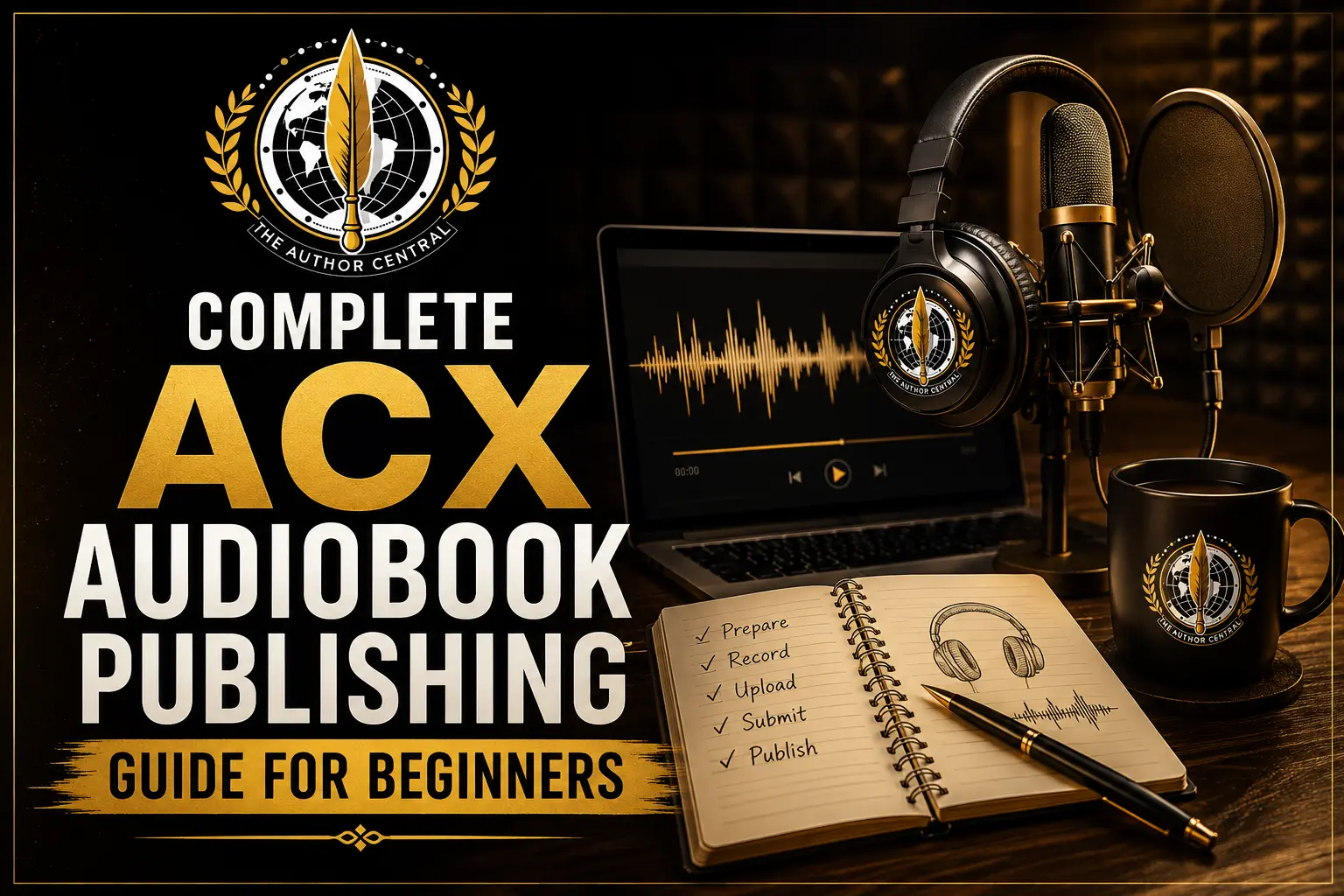
I remember finishing the narration and production on my first audiobook and thinking, okay, the hard part is done now. Nope. ACX audiobook publishing has its own weird learning curve that nobody really warns you about, and I found that out around midnight, three browser tabs deep in Amazon’s help center, trying to figure out why my file got rejected. Again.
I’ve been through the process a few times now, once for my own book and twice helping author friends limp theirs across the finish line. So this is the guide I wish someone had handed me back then. No jargon dump, no pretending it’s simpler than it is.
What ACX Actually Is and Why Authors Use It
Quick background if you’re totally new to this. ACX stands for Audiobook Creation Exchange, and it’s basically Amazon’s platform for producing and getting audiobooks onto Audible and Amazon at the same time. One upload, two major platforms. That alone is why so many indie authors end up here instead of chasing separate distribution deals.
The appeal is honestly pretty simple. No publisher connections needed, no studio, no massive existing audience. Just a finished book, a bit of patience, and a willingness to figure out a system that, I’ll say it plainly, isn’t the friendliest thing to look at when you first log in.
I stared at my dashboard the first time like it was written in another language. Tabs everywhere, terms I didn’t recognize, a weird sense that I was about to mess something up. If that’s where you’re at right now, you’re fine. It clicks faster than you’d think once you understand the basic flow.
How the Process Actually Works Step by Step
Broadly, here’s what happens. You link your title on ACX to your published book, usually pulled straight from your Amazon author account. Then comes the big decision, how do you actually want the audiobook narrated.
A few paths here. Narrate it yourself if you’ve got a decent mic and don’t mind hearing your own voice for eight hours straight. Hire someone through ACX’s built in database of narrators, which honestly has some really talented people if you’re willing to sit and listen through a bunch of samples. Or split the difference with royalty share, where you don’t pay anything upfront but split earnings with your narrator down the line, which sounds great until you realize it also means less control over timelines sometimes.
Once narration wraps, you upload the files, and here’s where most beginners hit their first real wall. ACX has oddly specific technical requirements, sample rate, bit rate, that weird bit of room tone at the start and end of every chapter, noise floor limits. Get one thing wrong and you get a rejection email that, in my experience, doesn’t always explain clearly what actually needs fixing.
Quick tip: Test one single chapter all the way through before you record the entire book. Catching problems early saves you from having to fix forty thousand words worth of audio later.
Getting Your Files Ready Without Losing Your Mind
This is where I think most people struggle the hardest with ACX audiobook publishing, so let’s actually slow down here instead of rushing through it. Files generally need to be 192kbps MP3, mono or stereo depending on how you recorded, with volume that stays consistent the whole way through.
Room tone got me early on. ACX wants a couple seconds of literal silence, just your room’s natural sound, at the start and end of every chapter file. Feels like such a tiny thing to skip, and yet it’s one of the most common reasons files bounce back.
Noise floor is sneakier though. Got a fridge humming somewhere in the house, or a fan running two rooms over? ACX’s automated check might flag it even when your own ears don’t pick up on it at all. At one point I was legitimately recording inside a closet stuffed with hanging clothes because fabric soaks up sound so well, and yeah, it fixed my noise floor problem almost overnight. Felt ridiculous. Worked great.
My honest advice, and I mean this, test one single chapter all the way through before you record the entire book. Upload it, check it against ACX’s requirements, catch the problems while you’re only dealing with one chapter instead of after you’ve already recorded forty thousand words and have to go back and fix everything.
Common Mistakes Beginners Make During Submission
Same handful of mistakes keep showing up, in my experience and my friends’ experience too.
Rushing the sample chapter. ACX pulls a retail sample, roughly five minutes, and uses it as the preview shoppers hear before buying. People treat this like an afterthought a lot of the time, but it’s genuinely one of the more important pieces since it’s often what convinces someone to actually hit purchase.
Volume jumping around between chapters. Record chapter three on a different day with the mic sitting slightly differently, and listeners will notice even if you don’t. Worth running a basic normalization pass across your files before you submit anything.
Skipping proper metadata. Your description, keywords, categories, all of it matters just as much here as it does for your ebook or paperback listing. Don’t just paste your Kindle blurb over without checking whether it actually reads well for someone browsing audiobooks specifically.
Underestimating review time. ACX usually takes a few days to review a submission, sometimes longer if they’re backed up. I assumed mine would go live within a day or two after my final upload. Ended up waiting almost a full week instead, just sitting there refreshing my dashboard for no reason.
Pricing, Royalties, and What You Actually Take Home
This trips up a lot of people going through ACX audiobook publishing for the first time, myself included back then. If you fund production yourself, paying a narrator directly or narrating it yourself without any royalty split, you typically earn a higher rate, often around 40 percent depending on your exclusivity choice.
Go the royalty share route instead and you and your narrator split earnings, usually 50 50, without paying anything upfront. Good option if money’s tight starting out, though your per sale cut ends up smaller over the long run.
Then there’s exclusivity to think about. Staying exclusive with ACX bumps your royalty rate but locks your audiobook to Audible, Amazon, and iTunes only. Go non exclusive and you can sell elsewhere too, just at a lower percentage. I went exclusive on my first book mostly because the math made sense for where I was at, though I’ve got author friends who went the other way and don’t regret it either.
Tips That Made My Second Audiobook Go Way Smoother
By book two I’d learned enough from my own mistakes that things actually went smoother, and these are the tips I’d pass along first if you asked me.
Write a pronunciation guide before recording starts, especially if there are character names, invented places, anything that isn’t standard dictionary English. I had a narrator once say a character’s name three different ways across different chapters because I never bothered giving clear guidance upfront. Fixing that after the fact was way more of a headache than just handling it early would’ve been.
Listen to entire chapters, not just quick clips, before you submit anything. Easy to miss a stumble or an odd pause skimming thirty seconds here and there, but full chapters show you pacing problems and energy dips that short snippets just won’t reveal.
If you’re hiring a narrator, keep a small folder of reference audio, examples of tone and pacing you’re going for. Saves a ton of back and forth messaging and honestly communicates your vision faster than any written description I’ve ever tried to write.
Should You Narrate Your Own Book or Hire Someone?
People ask this constantly, and it really depends on the book and how you feel about your own voice, honestly. Nonfiction, memoir, self help, these often work great narrated by the author, since readers usually want to hear the actual person behind the ideas. Fiction, especially anything with multiple characters or accents involved, tends to benefit way more from a trained narrator who can actually differentiate voices without it sounding forced.
I narrated my own nonfiction book myself and it felt like the right call for that project. But a friend of mine tried narrating her fantasy novel solo, and her character voices ended up blending together more than she wanted, listener feedback made that pretty clear too. Her next book, she hired someone, and she told me afterward the quality jump was honestly night and day.
Worth remembering: Nonfiction and memoir often work well narrated by the author, while fiction with multiple characters usually benefits from a trained narrator who can differentiate voices convincingly.
Wrapping Up Your ACX Audiobook Publishing Journey
Getting through ACX audiobook publishing the first time takes patience, no way around that, and there’s a genuine learning curve with all the technical requirements and the submission process itself. But once you’ve done it once, the second and third times feel almost routine by comparison.
Take your time with the file requirements, don’t rush your sample chapter just to get it over with, and think honestly about whether narrating the book yourself actually serves the story or whether hiring someone would do it more justice. Audiobooks have become a huge part of how people read now, whether they’re commuting or doing chores or just resting their eyes, and getting yours out through ACX is a solid way to reach readers who might never pick up your paperback otherwise.
If you’re just starting out, don’t let the technical side scare you off completely. Every single author who’s made it through ACX audiobook publishing successfully started exactly where you are, confused by the dashboard, unsure what room tone even means, wondering if they broke something. You’ll figure it out. Probably faster than you think.