Book Writing
 Book Cover Design
 Book Editing
 Book Formatting
 Book Publishing
 Book Video Trailer
 Book Printing
 Audio Books
 Book Illustrations
 Author Website
 Amazon Page Optimization
 Book Marketing
 Fiction Writing
 Non-Fiction
 Autobiography
 Memoir
 Novel Writing
 Children's Book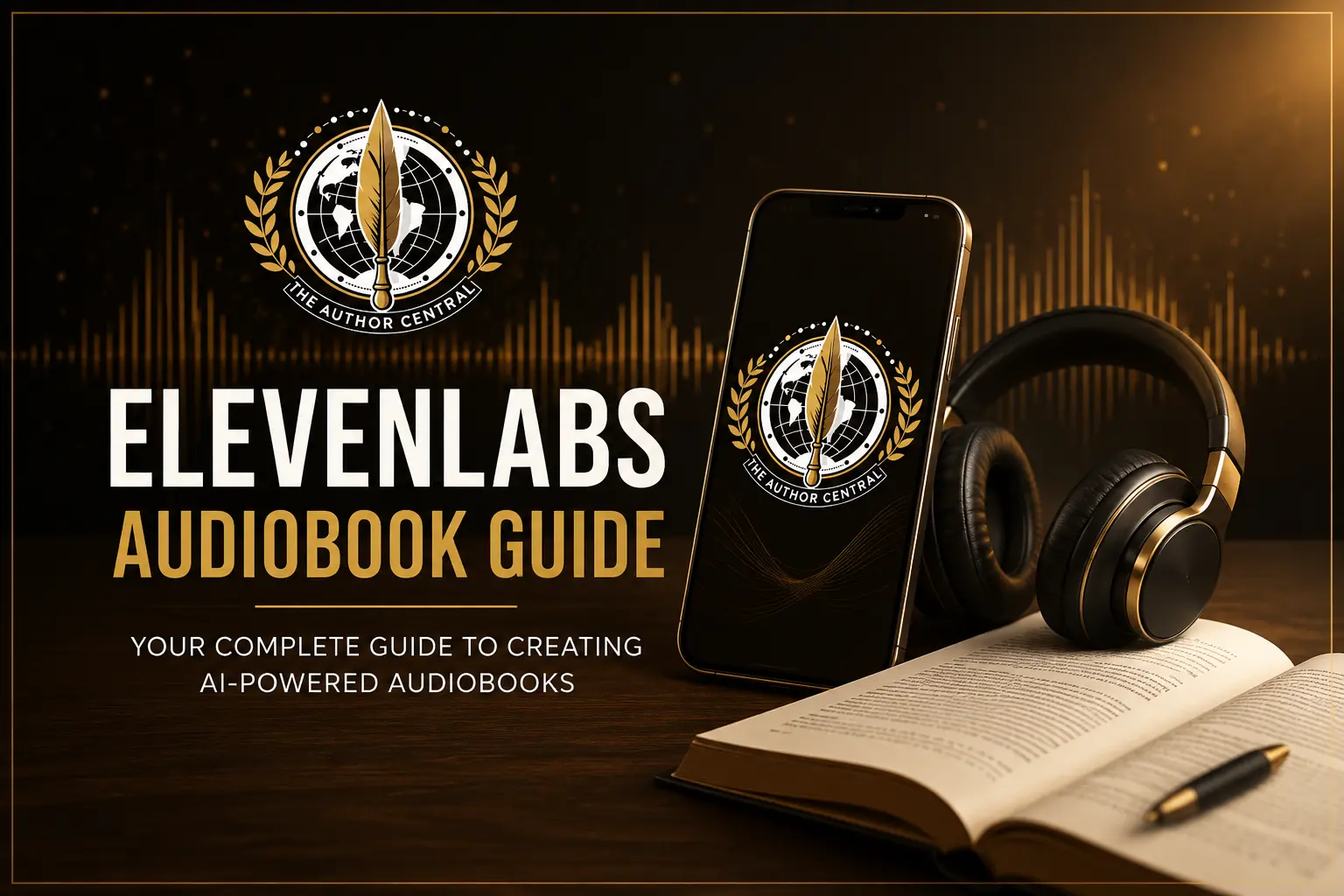
Okay so I need to admit something upfront. When I first heard about making an ElevenLabs audiobook, I rolled my eyes a little. I’d spent years assuming a real audiobook needed a real person in a booth somewhere, reading page after page for weeks. The idea that a computer could generate something close to studio quality narration sounded like one of those tech promises that never actually pans out.
Months later, after actually going through the whole process myself, I’m writing this because I wish someone had just told me straight what to expect. Not the shiny version you see in ads. The messy, confusing, occasionally frustrating real one, with all the little lessons I only learned by messing things up first.
What ElevenLabs Actually Is (In Plain Terms)
ElevenLabs is a text to speech tool that uses AI to produce voices that sound close enough to human that your brain sort of forgets it’s listening to a machine. Not the flat, robotic reading-machine voice you remember from GPS units back in 2010. These voices actually breathe a little. They pause where a person would pause. They inflect at the right moments, most of the time anyway.
For indie authors this is a pretty big deal. Getting an audiobook made the old fashioned way usually means one of two things. You hire someone, and depending on your book’s length that could run you anywhere from a few hundred bucks to a few thousand dollars. Or you try narrating it yourself, which sounds simple until you’re twelve takes deep on a single paragraph because your voice cracked or a dog started barking outside your window.
An ElevenLabs audiobook gives you a third option. Not free exactly, since most of the good voices sit behind a subscription, but way cheaper than hiring a narrator, and considerably faster too.
This is not a magic button. You don’t paste in your manuscript and get a finished, polished audiobook five minutes later. There’s a whole process in between, a lot of small decisions and adjustments, and understanding that process is honestly what separates people who end up with something good from people who give up halfway through, annoyed and out of patience.
I think a lot of authors go in expecting instant results because that’s how the marketing makes it sound. Then they hit their first weird mispronunciation or awkward pause and assume the whole thing is broken. It’s not broken. It just needs a bit of babysitting, the same way any new tool does when you’re first learning it.
How the Voice Generation Part Works
You upload your text, or paste it in chunks, and the platform runs it through its voice models. There are dozens of voices to choose from. Some are cloned from real actors who licensed their voice for this exact purpose. Others are built entirely from scratch, no real person behind them at all, just patterns learned from massive amounts of speech data.
The part that actually surprised me was how much control you get under the hood. There’s a stability slider that changes how consistent the emotional tone stays as it reads through longer passages. There’s a similarity setting too, which affects how closely the output sticks to the reference voice versus taking its own liberties with delivery. I probably spent a full week just messing with these two sliders before landing on something that actually fit my book, which was a slower, more literary kind of story with a lot of internal reflection.
If your book is fast paced and full of dialogue, you’ll want completely different settings than someone writing a quiet, introspective memoir. There’s genuinely no one size fits all approach here, and honestly that’s a good thing, even if it means more fiddling on your end before you land on something you’re happy with.
One thing worth mentioning, the length of the text chunks you feed in also matters. Shorter chunks tend to give you more consistent results, while longer ones sometimes drift in tone by the end. I learned that the hard way after generating an entire chapter in one go and noticing the narrator’s energy kind of fading toward the final few paragraphs.
My Own Experience Making an ElevenLabs Audiobook
Let me back up a bit. I’d just finished my second novel and readers kept messaging asking when the audiobook was coming. I priced out a professional narrator based on what I’d paid for my first book, and honestly the number made my stomach drop. Not even close to what I could afford at the time, especially with everything else that goes into publishing a book.
Testing Voices Until Something Finally Clicked
So mostly out of curiosity, I decided to try making an ElevenLabs audiobook instead. I spent an entire weekend testing voices against the same three paragraphs from chapter one. I think I went through ten different voices, maybe more, before one finally felt right for the tone of my story. A few sounded too young. A couple sounded oddly cheerful for what was supposed to be a fairly somber scene. Eventually I found one that just clicked.
Why Manuscript Formatting Matters More Than You’d Think
Here’s a thing nobody warns you about. How your manuscript is formatted matters way more than you’d think. Run on sentences, weird punctuation choices, paragraph breaks in odd places, all of it throws off the pacing in ways that genuinely surprised me. I ended up going back through my whole book cleaning up sentences I’d read a hundred times and never noticed were clunky. Tedious? Yes. Worth it? Also yes, because the difference in how natural the final audio sounded was noticeable.
From Fast Generation to a Rough First Pass
Once the voice was picked and the text was cleaned up, the actual generating part moved fast. Faster than I expected honestly. What would’ve taken a human narrator several weeks took me a few days from start to finish. But and this is important, fast doesn’t mean done. My first pass had mispronounced words, a couple flat emotional moments, and one section where the pacing just felt off compared to everything around it. I had to go back in and regenerate those bits more than once before I was satisfied.
The Editing Phase Nobody Warns You About
This part surprised me more than anything else. Everyone talks about ElevenLabs like it’s some instant one click solution, but the real work happens in editing. You break your book into smaller sections, generate each one, actually sit down and listen carefully, then fix whatever doesn’t sound right before moving on.
Made up character names gave the AI the hardest time, unsurprisingly. Names I thought were pretty simple came out sounding strange on the first try, stressed on the wrong syllable or blended together oddly. My workaround was adding phonetic spelling hints in brackets, which the system reads correctly without actually including the bracketed text in the final audio, once you know how to set it up properly.
Pacing needed manual attention too. Dramatic pauses, tense moments, quiet reflective scenes, none of that came out exactly right automatically. I had to go in and adjust those by hand, sometimes breaking a single sentence into two separate generations just to force a longer pause in the right spot. Maybe that’ll change down the line as the technology improves, but right now it’s still very much a hands on process, not something you can just set and forget.
I’d also add that listening on good headphones made a real difference. I caught mistakes on headphones that I completely missed when playing audio through my laptop speakers. Small thing, but it saved me from publishing a few embarrassing mispronunciations.
Is an ElevenLabs Audiobook Right for You
People ask me this constantly, and honestly my answer is it depends. If you write genre fiction with a fairly consistent tone throughout, an ElevenLabs audiobook can work really well and save you a serious amount of money. Thrillers, romance, sci fi, these tend to translate nicely since the pacing is more about plot momentum than nuanced performance.
But if your book leans on distinct character voices, heavy accents, or really subtle emotional shifts, you might end up a little disappointed. AI narration has improved a ton over the past couple years. But it still stumbles with layered performance. A skilled human narrator brings something different when there’s a big cast of characters, each needing their own distinct personality and cadence.
Budget matters here too, obviously. If hiring a narrator is realistic for you, and your genre really calls for that human touch, it might still be the better call in the long run. But for a lot of independent authors working with tighter budgets, an ElevenLabs audiobook makes this accessible in a way it just wasn’t a few years back. And that alone has opened doors for writers who otherwise would never have had an audiobook at all.
A Few Practical Tips If You’re Thinking About Trying This
Based on everything I fumbled through, here’s what I’d actually tell a friend sitting where I was a year ago.
Clean up your manuscript first, before you even open the platform. Fix the run ons, simplify weird punctuation, and read it out loud yourself beforehand. If it sounds clunky coming out of your own mouth, it’ll sound clunky coming out of the AI too, guaranteed.
Don’t rush picking a voice. Test a few against the exact same passage, not different ones each time. What sounds great for a single paragraph can fall apart over a full chapter, so give each option a fair, consistent test.
Leave room for editing. Seriously, budget real time for this part. Treat your first generated version as a rough draft, not a finished product, and don’t hesitate to regenerate sections as many times as it takes to get them right.
Check your distribution platform’s rules before you get too deep into this process. Some places have specific policies about AI narrated audiobooks, so it’s worth a quick look before you sink hours into something that might need adjusting later anyway.
Be patient with yourself. This isn’t a skill you master in one afternoon. The first audiobook I made taught me more than any tutorial could have, simply because I had to troubleshoot real problems as they came up.
Conclusion
Looking back, making my ElevenLabs audiobook was one of the better calls I made for my writing this past year. It wasn’t quick, and it definitely took more patience than I expected going in, but it opened a door that would’ve stayed shut otherwise because of money.
If you’re on the fence about whether an ElevenLabs audiobook is worth trying, my honest advice is simple. Just test it on one chapter first. See how it sounds. Listen with a critical ear, then decide if it fits your book and your budget. It’s not going to replace a great human narrator in every situation. But for plenty of us, it’s made something possible that simply wasn’t within reach before. And that’s worth a lot more than people give it credit for.