Book Writing
 Book Cover Design
 Book Editing
 Book Formatting
 Book Publishing
 Book Video Trailer
 Book Printing
 Audio Books
 Book Illustrations
 Author Website
 Amazon Page Optimization
 Book Marketing
 Fiction Writing
 Non-Fiction
 Autobiography
 Memoir
 Novel Writing
 Children's Book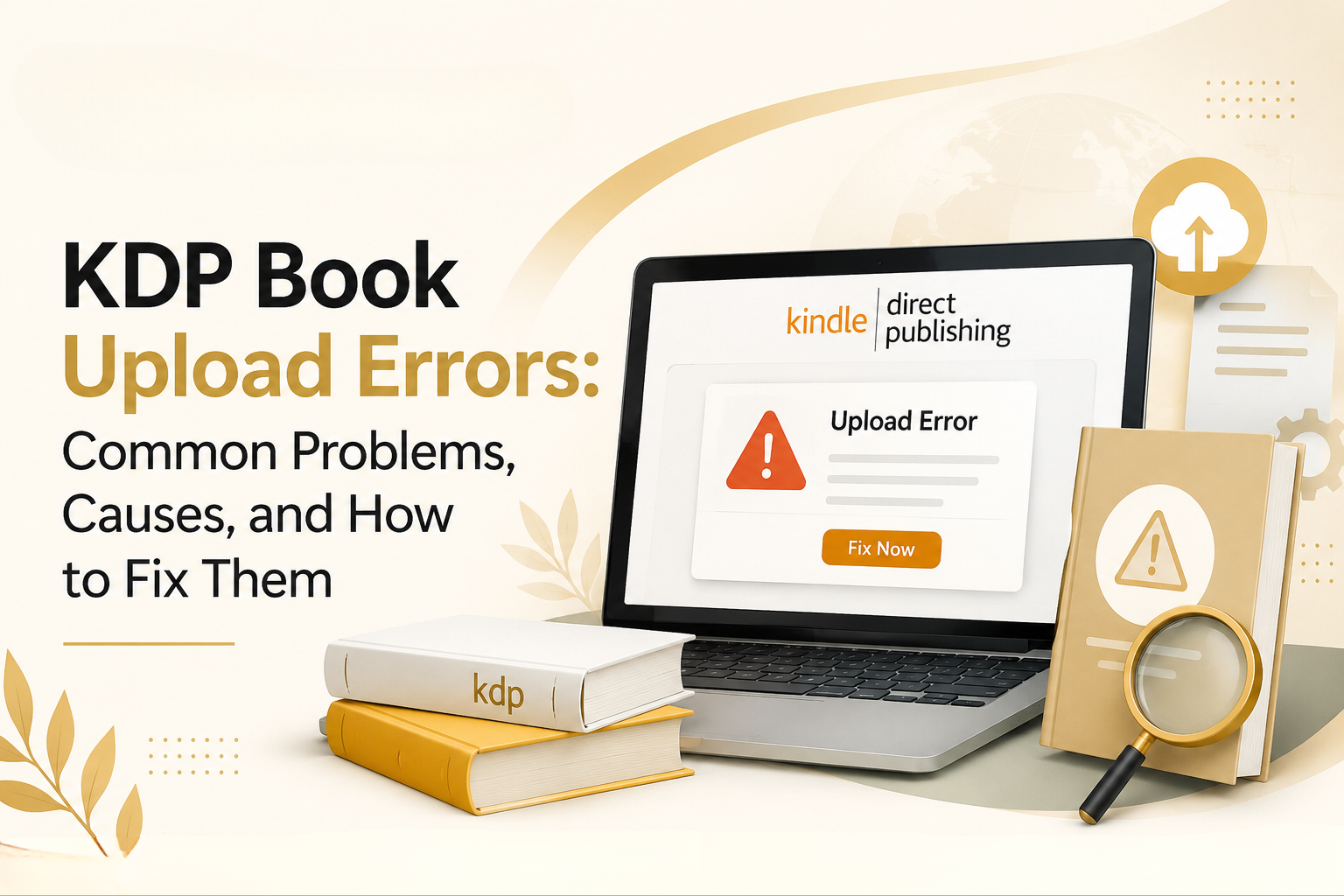
Uploading a book to Amazon Kindle Direct Publishing (KDP) can feel straightforward until a manuscript, cover, or metadata file triggers an error. A book may look perfect in Word, Canva, InDesign, or another design program and still fail KDP’s validation because the final file does not meet the requirements for its selected format.
If you’re searching for how to fix KDP book upload errors, the first step is to identify exactly which part of the publishing package is causing the problem. Most KDP book submission problems come from manuscript formatting, trim size, bleed, margins, image quality, fonts, PDF exports, cover dimensions, or metadata mismatches.
The good news is that most Amazon KDP book publishing errors are fixable. Instead of repeatedly uploading the same file, identify the specific warning, correct the underlying file, and then validate the revised version before submitting it again.
Common KDP Errors and How to Fix Them
KDP errors generally fall into a few categories:
- Interior manuscript or formatting problems
- Incorrect trim size or page dimensions
- Bleed and margin problems
- Cover size or cover upload errors
- Low-resolution images
- Font and PDF issues
- ISBN or imprint mismatches
- Ebook conversion and formatting problems
- Metadata or publishing information errors
The most effective approach is to troubleshoot the error based on the actual file rather than making random changes.
A useful workflow is:
Identify the error → locate the source of the problem → correct the file → export again → preview and validate → upload the corrected version.
This process connects KDP manuscript preparation, KDP book upload and formatting, file validation, preview, and final publishing.
KDP Manuscript Formatting and Upload Problems
Proper KDP manuscript formatting and upload begins before the file reaches KDP. Your manuscript should be prepared specifically for the format and trim size you’ve selected.
Common problems include:
- Incorrect page dimensions
- Text placed too close to the edge
- Inconsistent margins
- Images extending incorrectly
- Missing fonts
- Poor-quality graphics
- Unexpected blank pages
- Headers or footers appearing incorrectly
- Improper PDF exports
- Formatting changes during file conversion
For print books, review the interior as a complete document rather than checking individual pages in isolation. A formatting change on one page can affect page breaks, chapter openings, headers, footers, and the overall page count.
For KDP book formatting and publishing, always work from a clean final manuscript rather than repeatedly modifying a previously exported PDF. If possible, correct the source document, then create a fresh final file.
KDP Bleed Error: Causes and Fixes
A KDP bleed error usually means an element intended to extend to the edge of a printed page does not extend far enough beyond the trim area.
What it means
Bleed is the extra image or background area that extends beyond the final trimmed edge of a print page. It gives the printing process enough room for small variations during trimming.
Why it happens
A bleed problem can occur when:
- Background artwork stops at the trim edge
- Images are sized only to the final trim dimensions
- The document was created without bleed
- The wrong page dimensions were used
- Artwork was resized after the layout was completed
How to fix it
First determine whether your book actually requires bleed. If it does, extend the relevant background or artwork beyond the trim boundary according to the specifications applicable to your selected KDP format and setup.
Do not simply enlarge the entire manuscript without checking the page dimensions. The interior size, trim size, margins, and bleed need to work together.
How to prevent it
Set up the document correctly before placing artwork. Then inspect pages with edge-to-edge graphics during the final KDP manuscript quality check.
KDP Trim Size Error and How to Correct It
A KDP trim size error occurs when the submitted interior or cover does not match the dimensions associated with the selected book configuration.
Trim size is the final physical size of the printed book after trimming. Choosing a trim size in KDP but uploading a file created at different dimensions can result in a validation error.
How to fix a trim size problem
- Confirm the trim size selected in your KDP setup.
- Check the actual dimensions of the interior file.
- Check whether the document includes bleed where required.
- Recreate or resize the interior using the correct specifications.
- Export a new final file.
- Open the exported file and verify its dimensions before uploading again.
Do not rely only on what your design software calls the document size. Check the actual exported file.
KDP Margin Error: What Authors Need to Check
A KDP margin error generally relates to content being positioned too close to an edge or binding area.
Margins are especially important in print books because the inside edge of a page is affected by the binding. Text that looks comfortably positioned on a computer screen can become uncomfortably close to the binding when printed.
Check:
- Top and bottom margins
- Outside margins
- Inside or gutter area
- Headers and footers
- Page numbers
- Images and decorative elements
The exact margin requirements can vary depending on the book’s format and configuration, so use the applicable KDP specifications rather than assuming one margin value works for every book.
KDP Cover Size Error and Cover Upload Problems
A KDP cover size error is commonly caused by using the wrong overall cover dimensions.
A print cover is not simply the front-cover size multiplied by two. The complete cover can include the back cover, spine, and bleed. The required dimensions depend on factors such as trim size, page count, format, and paper configuration.
A KDP cover upload error may therefore occur when:
- The cover uses the wrong trim dimensions
- Spine width is incorrect
- Bleed is missing
- Text is too close to an edge
- The cover was designed for a different page count
- The selected format does not match the cover
- The exported PDF has incorrect dimensions
Before exporting the cover, confirm the current specifications and create the design around the correct dimensions. A cover designed for one book configuration may not work for another.
KDP Image Resolution Error: How to Fix Low-Resolution Images
A KDP image resolution error can occur when images in a print file do not have sufficient quality for the intended output.
Low-resolution images can appear acceptable on a monitor but become blurry or pixelated in print.
To reduce image-quality problems:
- Start with the highest-quality source image available.
- Avoid repeatedly enlarging small images.
- Check image dimensions before placing them into the manuscript.
- Export the final file using appropriate print-quality settings.
- Inspect image-heavy pages in the previewer before publishing.
Resolution should be evaluated in relation to the physical size at which an image will print, not just the number shown in an editing program.
KDP Font Embedding Error
A KDP font embedding error can result from fonts that are missing, unsupported, improperly embedded, or incorrectly handled during PDF creation.
This is one reason why a document can look correct on your computer but change when processed elsewhere.
For a reliable KDP book upload and formatting workflow:
- Use fonts that are suitable for your publishing format.
- Confirm the fonts are available and correctly applied.
- Export the PDF using appropriate settings.
- Verify that the exported PDF retains the intended typography.
- Check the final file on another system when practical.
If text shifts, symbols disappear, or a font changes after export, investigate the font or PDF export rather than assuming KDP itself changed the manuscript.
KDP ISBN Error and Imprint Error
A KDP ISBN error or KDP imprint error is usually related to information entered during the publishing setup not matching the information associated with the book or ISBN.
Before submitting, carefully compare:
- Book title
- Author information
- ISBN
- Imprint information
- Format
- Edition information
- Other metadata
If an ISBN is associated with particular imprint information, changing the imprint name in KDP without verifying the underlying ISBN details can create a mismatch.
Do not repeatedly change metadata at random. First identify which piece of information does not match and correct the source of the discrepancy.
KDP PDF Upload Error and File Conversion Error
A KDP PDF upload error may be caused by a damaged PDF, incorrect export settings, unsupported elements, or problems introduced during conversion.
A KDP file conversion error can also occur when the original document contains complicated formatting, unusual fonts, transparent objects, or other elements that do not convert cleanly.
If the upload fails:
- Open the PDF independently.
- Check whether every page displays correctly.
- Verify the page dimensions.
- Check fonts and images.
- Look for corrupted or missing content.
- Re-export the document from the original source.
- Avoid unnecessary conversions between multiple file formats.
When possible, create a fresh final export rather than repeatedly uploading a file that has already produced an error.
KDP Print Previewer Errors You Should Check
KDP’s preview tools are an important part of the publishing process. KDP Print Previewer errors or visual warnings can reveal problems that were not obvious in your design software.
Look carefully for:
- Cut-off text
- Images crossing boundaries incorrectly
- Unexpected blank pages
- Incorrect page breaks
- Font changes
- Misaligned elements
- Header or footer problems
- Cover alignment issues
Do not treat preview as a formality. The preview stage is where you should verify how the finished book is expected to appear before approving it.
Why Your KDP Manuscript Is Rejected
A KDP manuscript rejected message does not necessarily mean the entire book is unusable. It usually means something in the submitted content or publishing information needs attention.
Possible causes include formatting, file quality, metadata inconsistencies, content issues, or requirements specific to the selected format.
The rejection message is the starting point for troubleshooting. Read it carefully, identify the exact issue, correct the relevant file or metadata, and submit the revised version.
If the message is unclear, avoid making unrelated changes. Changing several things at once can make it difficult to determine which correction actually solved the problem.
Paperback, Hardcover, and Ebook Upload Errors
KDP Paperback Upload Errors
KDP paperback upload errors commonly involve interior dimensions, margins, bleed, cover sizing, image quality, and PDF preparation.
Because paperback interiors are printed, physical layout matters. Always verify the relationship between trim size, bleed, margins, page count, and cover dimensions.
KDP Hardcover Upload Errors
KDP hardcover upload errors can involve requirements that differ from paperback publishing. Hardcover files should therefore be prepared specifically for the selected hardcover configuration rather than simply reusing a paperback file without checking it.
Verify the current hardcover specifications, interior setup, cover requirements, and page-count limitations applicable to your book.
KDP Ebook Upload Errors
KDP ebook upload errors are different because ebooks generally need to work across varying screen sizes and reading environments.
Problems can include:
- Incorrect formatting
- Broken navigation
- Images displaying incorrectly
- Font or layout issues
- Conversion problems
- Unsupported elements
An ebook should be validated as an ebook rather than treated as a digital copy of a print PDF.
KDP Publishing Checklist
Before submitting your book, use this practical KDP publishing checklist:
- Confirm the selected book format.
- Verify the trim size.
- Check bleed requirements.
- Review margins and gutter placement.
- Inspect all images.
- Verify image quality.
- Check fonts.
- Export the final PDF correctly when applicable.
- Confirm the interior dimensions.
- Verify cover dimensions.
- Check spine and bleed areas.
- Confirm ISBN information.
- Verify imprint information.
- Review title, author, and other metadata.
- Run the appropriate preview tools.
- Inspect the complete book page by page.
- Correct validation warnings.
- Perform one final KDP manuscript quality check before publishing.
This final review can prevent many avoidable KDP publishing requirements issues.
How to Prevent KDP Book Submission Problems
The easiest way to deal with an upload error is to prevent it before submission.
Start with KDP manuscript preparation, not with the upload screen. Decide the book format and trim size first, then build the manuscript and cover around those choices.
Keep a clean source file, avoid unnecessary conversions, and make a fresh final export after significant changes.
Most importantly, don’t judge a file only by how it looks on your computer. Validate the actual exported file and review it using KDP’s available preview tools.
A disciplined process of manuscript preparation → formatting → export → validation → preview → publishing is much more reliable than uploading repeatedly and hoping the next attempt works.
When to Get KDP Book Publishing Help
Many straightforward formatting problems can be fixed by authors themselves. However, professional assistance can be useful when a book has complicated layouts, extensive illustrations, multiple formats, recurring upload failures, or difficult cover and interior requirements.
KDP book publishing help may also save time when you are unsure whether an error originates from the manuscript, cover, metadata, or publishing setup.
Professional KDP manuscript preparation, formatting, and publishing assistance should focus on diagnosing the actual problem rather than simply making repeated changes until an upload succeeds.
If an issue involves Amazon account-specific information or a policy decision that cannot be resolved through file correction, Amazon KDP publishing support may be the appropriate next step.
Why is KDP showing a margin error?
A margin warning can occur when text, page numbers, headers, footers, or other important content is too close to an edge or binding area. Review the applicable margin and gutter requirements for your format.
What causes a KDP cover upload error?
Common causes include incorrect cover dimensions, incorrect spine width, missing bleed, incorrect trim size, or creating the cover for a different page count or book configuration.
How do I fix a KDP image resolution error?
Use high-quality source images and avoid enlarging small images excessively. Check the image at its intended physical print size and inspect the final exported file before submission.
Why am I getting a KDP PDF upload error?
Possible causes include a damaged PDF, incorrect page dimensions, problematic fonts, unsupported elements, or an unsuccessful export. Re-export the PDF from the original source and verify the new file before uploading.
What should I check before submitting a book to KDP?
Check the format, trim size, bleed, margins, images, fonts, interior file, cover dimensions, ISBN, imprint, metadata, preview, and final file validation.
What are the most common KDP errors and how do you fix them?
The most common problems involve formatting, trim size, bleed, margins, covers, images, fonts, PDFs, ISBNs, imprints, and ebook conversion. The correct solution is to identify the specific source of the error and fix that part of the publishing package.
When should I seek KDP book publishing help?
Consider professional help when repeated upload attempts fail, your manuscript has complex formatting, you are publishing multiple formats, or you cannot determine whether the problem is in the file or publishing setup.
Conclusion
Successful KDP publishing starts long before clicking the Upload button. Proper manuscript preparation, accurate dimensions, appropriate margins and bleed, high-quality images, reliable fonts, correctly exported files, accurate metadata, and thorough previewing can prevent many common problems.
When an error does appear, don’t panic or repeatedly upload the same file. Read the message, identify the underlying cause, correct the source document, create a fresh final file, and validate it before submitting again.
Whether you’re handling KDP book formatting and publishing yourself or need professional assistance, a structured quality-control process makes the entire publishing workflow much easier and more predictable.